

 English
  русский
  Español
  عربى
عربى 
Content
- 1 01 Market Status: A Mature Industry with Steady Growth
- 2 02 Technological Evolution: Smart and Precise
- 3 03 Quality Benchmark: Manufacturing Standards Approaching Zero Defects
- 4 04 The NEV Opportunity: New Demands Under Electrification
- 5 05 Future Trends: Market Diversification and Technology Convergence
The Gas Spring Industry for Car Trunks Sees Steady Growth: A Small Component Supporting a Large Market.
2026-01-04
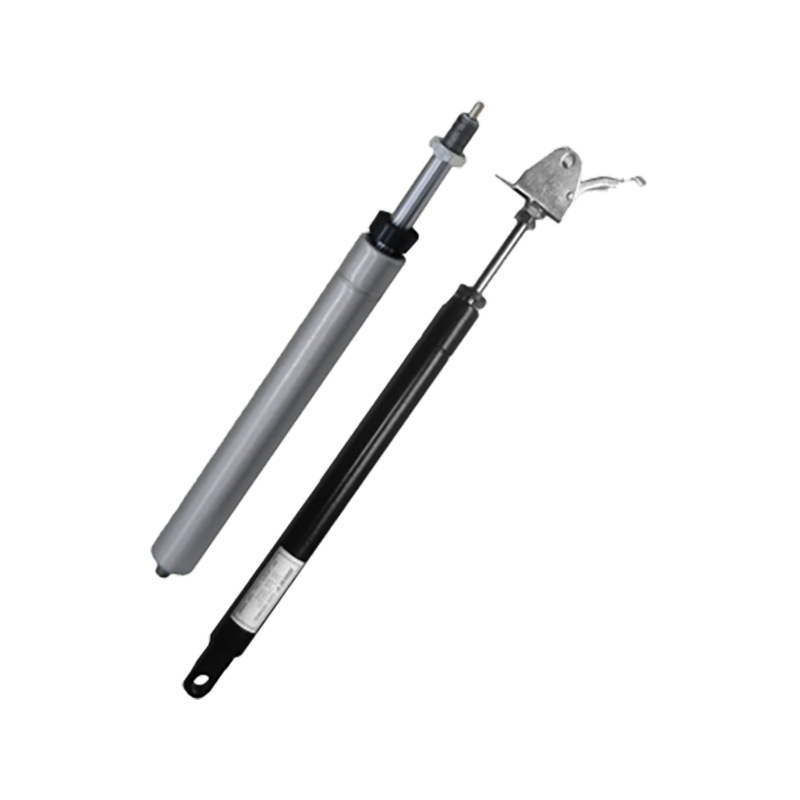
Automotive gas springs, professionally known as "gas struts" or "lift supports," are devices that utilize sealed high-pressure nitrogen gas to provide smooth supporting force. They have become standard equipment for modern car trunks, engine hoods, and even sliding doors.
According to industry research statistics, the global revenue scale for automotive gas springs in 2023 was approximately 8.69 billion yuan, with the market maintaining steady growth. In China, a factory established by a foreign-invested enterprise in Jiangsu Province alone has an annual production capacity exceeding 30 million units, generating sales revenue of over 1 billion yuan.
01 Market Status: A Mature Industry with Steady Growth
The gas spring industry is a mature and continuously growing niche market. According to market forecasts, the global gas spring market is expected to maintain continuous growth between 2026 and 2034.
In the automotive field, gas springs are mainly categorized by function into two major types: "Non-locking" and "Locking," corresponding to applications requiring continuous support and those needing to remain suspended at any position, respectively.
In terms of specific product types, automotive gas springs can be further subdivided by installation location into hood struts, trunk/hatch struts, rear glass struts, and tailgate struts.
The automotive industry is the largest application field for gas springs, a position expected to remain solid in the foreseeable future. With stable global vehicle production and continuous model updates, the demand for gas springs as standard components remains robust.
02 Technological Evolution: Smart and Precise
The core advancements in gas spring technology are reflected in improvements in precision, reliability, and adaptability. Industry leaders are continuously tackling technical challenges through sustained R&D investment.
A longstanding industry challenge has been the significant impact of temperature on gas spring output force. High-pressure nitrogen gas expands with heat and contracts with cold. In regions with large temperature variations between summer and winter, the supporting force of gas springs can change, affecting the user experience.
The latest solution involves integrating a temperature compensation component inside the gas spring. This component uses the volume change of a sensitive wax to counteract the pressure change of the gas, thereby achieving stable output force under all climate conditions. This technology has already been put into production and received positive market feedback.
Simultaneously, the manufacturing process is moving towards comprehensive automation and digitization. By introducing the latest production lines with integrated automatic inspection functions, processes like automatic processing and detection are realized, keeping product defect rates at an extremely low level.
03 Quality Benchmark: Manufacturing Standards Approaching Zero Defects
In the gas spring industry, product quality is the key to competition. The industry typically uses PPM (parts per million) to measure the defect rate, and leading companies have managed to reduce this number to a very low level.
Some enterprises report that their product PPM at the client end is as low as 1.7, meaning there are no more than 2 defective products per million gas springs, almost achieving zero defects.
The key to reaching this quality level lies in precise control throughout the entire process, from raw material selection to automated production and finally to strict inspection, with every step pursuing ultimate precision.
This relentless pursuit of quality enables high-end gas spring products to maintain stable performance throughout the vehicle's service life, requiring no maintenance or replacement, significantly enhancing the vehicle's overall reliability and user satisfaction.
04 The NEV Opportunity: New Demands Under Electrification
As the automotive industry transforms towards electrification, the gas spring sector faces new opportunities. The rise of new energy vehicles (NEVs), especially electric vehicles (EVs), brings new growth points for gas spring applications.
The rapid development of new energy vehicles has brought new growth opportunities to the automotive gas spring industry. Although "air springs" here mainly refer to suspension systems, it also reflects the overall increased demand for various spring components in NEVs.
The structural characteristics of EVs pose new requirements for gas springs. For example, a trunk integrated with a battery pack may require stronger support force, an electric tailgate system needs more precise force control, and the layout of complex electronic control units under an electric hood might affect the installation space and mechanical properties of the gas spring.
Leading companies in the industry have already listed NEV manufacturers as key clients, including emerging brands like BYD, Li Auto, Xiaomi, and XPeng. These collaborations represent not only order growth but also opportunities for technological co-innovation.
05 Future Trends: Market Diversification and Technology Convergence
Looking ahead, the automotive gas spring industry will exhibit parallel trends of continued market diversification and cross-border technology convergence. On one hand, the market size is expected to continue expanding, with global revenue projected to approach 10.76 billion yuan by 2030.
Product innovation will increasingly focus on enhancing user experience. For instance, quieter operation, smoother start-stop motion, and more precise force control could become key differentiators.
On the other hand, gas spring technology may further integrate with electric tailgate systems and smart sensing systems. In the future, gas springs might not merely be passive components providing mechanical support but could evolve into intelligent modules capable of active adjustment based on usage scenarios.
Environmental protection and sustainability will also become important considerations for industry development. The inherent characteristics of long life and maintenance-free products are themselves an environmental advantage. Efficient use of energy and materials in the manufacturing process will also emerge as a new dimension of industry competition.
This component, hidden beside the hinges, though inconspicuous, is one of the most frequently used parts in a vehicle. From the first opening to the final closing, the gas spring works silently, ensuring every operation is smooth and safe with near-zero-defect reliability.
With advancements in materials science and manufacturing processes, future gas springs will become lighter, stronger, and smarter, continuing to play an indispensable role in the evolution of the automotive industry.




- Contact Info
-
-
 Phone+86-15950656125
 -
 Email
Email -
 AddressRoom 1007-1, South Building, Suyue Plaza, Suzhou Industrial Park, Suzhou City, Jiangsu Province, China
-
- Products
- Follow Us
- Need help? Please contact us
Copyright ©
SuZhou Skyhone Intelligent Technology Co., Ltd.
All Rights Reserved.
Privacy
Custom Ergonomic Adjustable Office Tables Manufacturers

