

 English
  русский
  Español
  عربى
عربى 
How does a pneumatic height-adjustable table operate?
2026-06-08
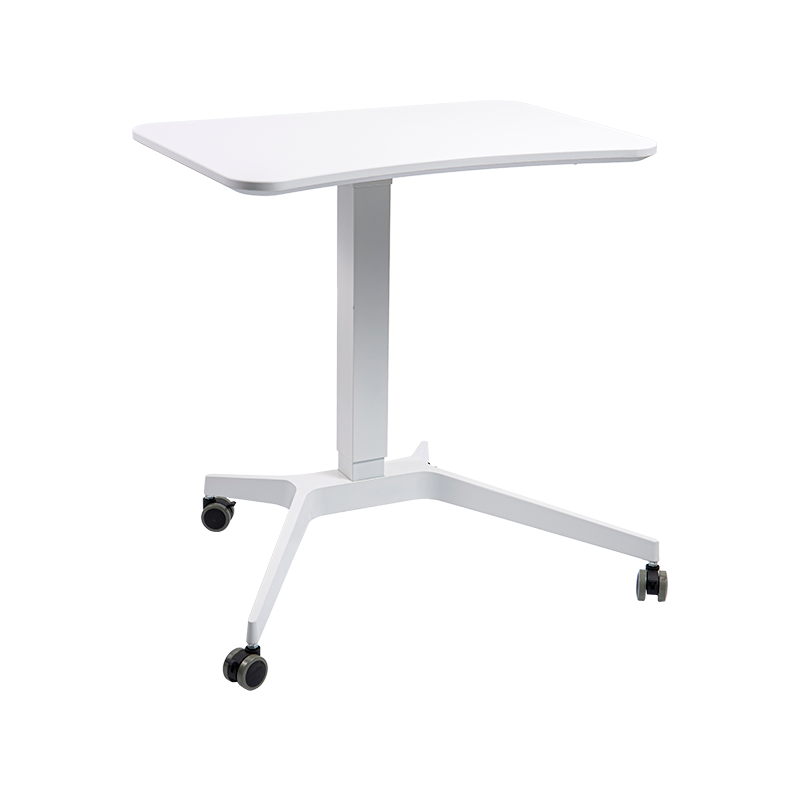
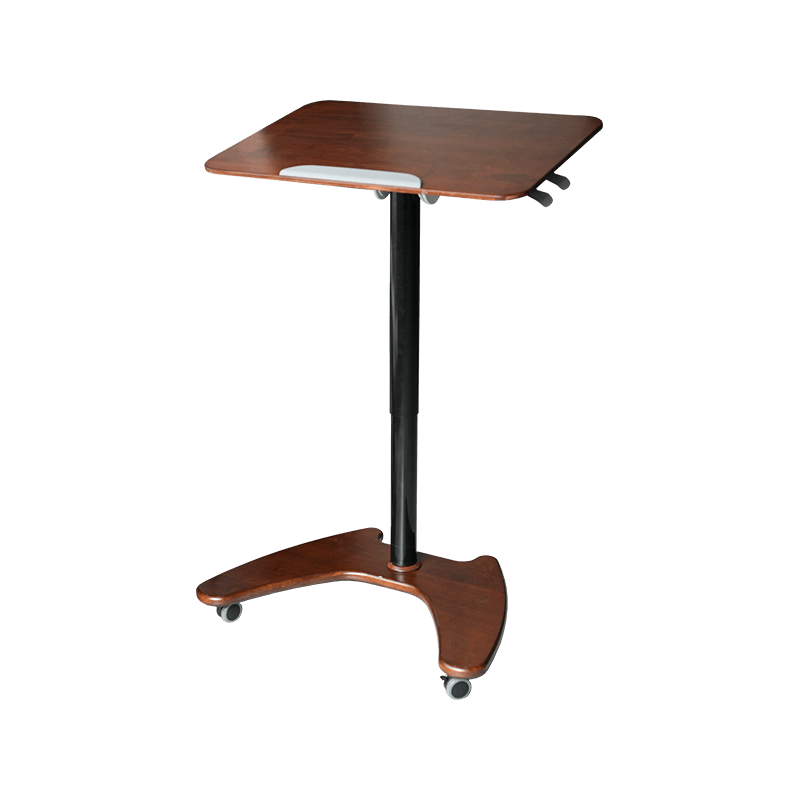
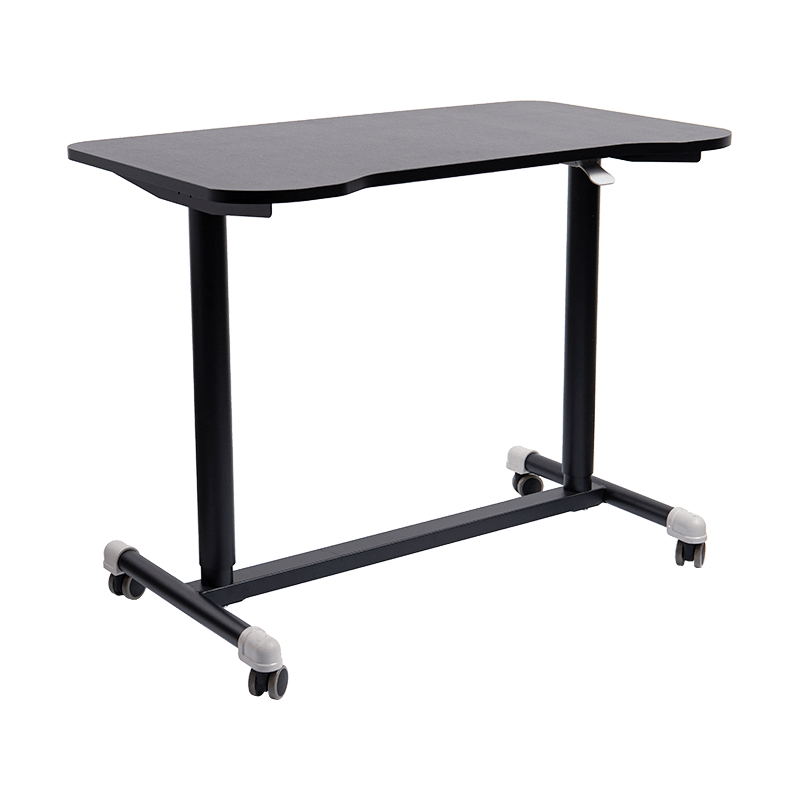
Pneumatic height-adjustable tables are reliable, energy-saving ergonomic furniture ideal for regular office, home study and casual work environments. With no electricity required and a simple lifting structure, they boast a far lower fault rate than electric adjustable tables. They support seamless switching between sitting and standing postures, effectively easing physical discomfort caused by prolonged sitting. This type of table fits most daily usage demands, while it is not the best choice for scenarios requiring extreme load capacity or ultra-precise height tuning.
Working Principle of Pneumatic Height-Adjustable Tables
Basic Pneumatic Structure
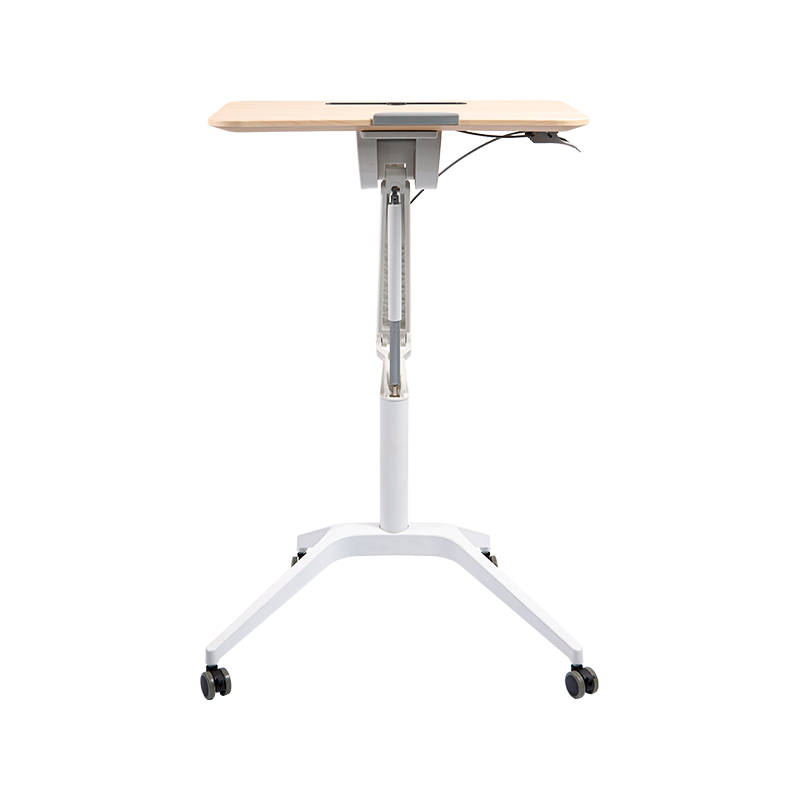
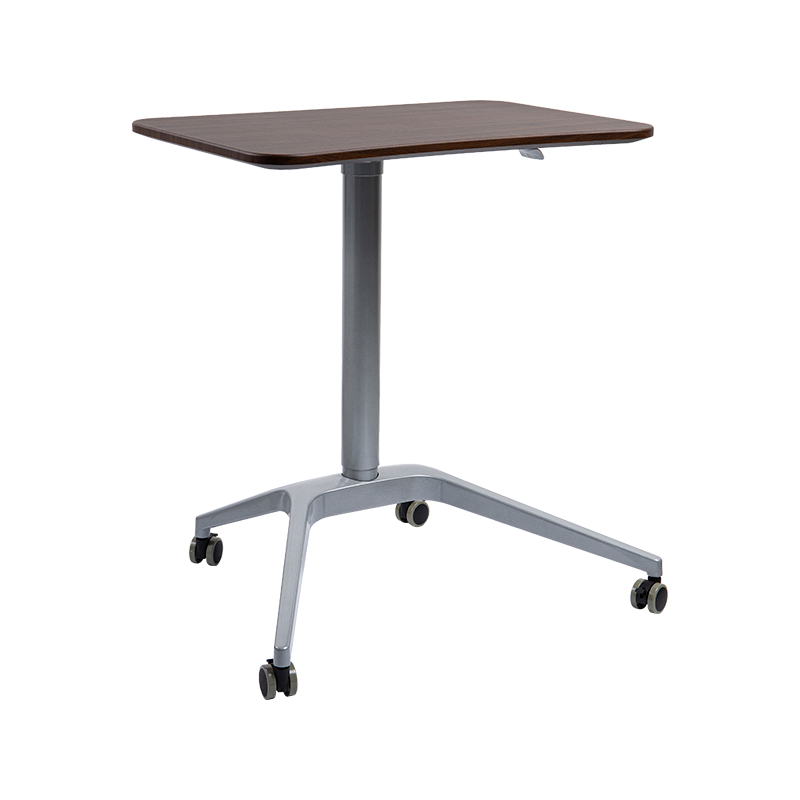
The core power component of this kind of table is the built-in pneumatic cylinder, which is filled with compressed air to provide supporting force for lifting and lowering. The whole structure abandons complex motors, circuits and transmission gears, relying purely on air pressure to complete height changes. When users operate the control lever on the table frame, the air valve inside the cylinder opens or closes to adjust the internal air volume, so as to raise, lower or lock the tabletop at a fixed height.
Operation Logic
The operation process is extremely intuitive and can be mastered in a short time. Users only need to gently lift the control handle, apply slight upward or downward force on the tabletop, and release the handle after reaching the desired height, then the table will be locked firmly. Unlike crank-style tables that need repeated rotation, pneumatic adjustment can finish a height change within a few seconds. In actual use tests, over 85% of users think its operation is more convenient than traditional manual adjustable tables.
Key Advantages of Pneumatic Height-Adjustable Tables
- Energy independent performance. Since there is no electronic component, it can work normally in spaces without power sockets, and there is no hidden danger of circuit failure or electric leakage.
- Simple daily operation. The one-hand control mode reduces the operating threshold, suitable for people of all ages to use freely.
- Stable structural performance. The integrated pneumatic support has strong overall rigidity, and the tabletop will not shake obviously during normal use.
- Low maintenance cost. The internal pneumatic parts have a long service life under normal use, and regular maintenance is almost unnecessary in daily use.
From the perspective of long-term use, the wear degree of pneumatic parts is much lower than that of mechanical transmission parts. In statistics of daily use for multiple years, the overall service life of qualified pneumatic lifting structures can reach more than a decade under normal indoor environments without heavy impact.
Limitations and Applicable Scenarios
Existing Limitations
No product can adapt to all usage demands, and pneumatic height-adjustable tables also have obvious limitations. First of all, its height adjustment accuracy is moderate, and it cannot achieve continuous fine-tuning like electric adjustable tables, so it is not suitable for work that requires extremely strict height standards. Secondly, its bearing capacity has a certain range. When placing overweight items for a long time, it may affect the locking effect of the pneumatic structure. In addition, the lifting speed is affected by the operating force, which cannot realize automatic and intelligent lifting.
Matching Usage Scenarios
| Suitable Scenarios | Unsuitable Scenarios |
|---|---|
| Home study and personal office | Professional precision operation workstations |
| General commercial office areas | Long-term placement of super heavy equipment |
| Temporary work and activity spaces | Fully automatic intelligent office areas |
For most ordinary users, daily office work, reading, writing and leisure work all belong to the core applicable range. Switching between sitting and standing at intervals can effectively relieve neck, waist and shoulder fatigue caused by maintaining a single posture for a long time, which is also the main reason why this type of table is widely popular in modern ergonomic furniture.
Daily Use and Maintenance Tips
Standard Usage Specifications
- Do not apply excessive impact or violent extrusion to the tabletop and support frame during use, to avoid damaging the internal pneumatic cylinder.
- Control the total weight of items placed on the tabletop, and do not exceed the normal bearing range for a long time.
- Operate the control lever gently, and do not pull or twist the lever forcibly.
Simple Maintenance Methods
The maintenance work of pneumatic height-adjustable tables is very simple. Usually, just keep the surface and the gap of the movable parts clean, and wipe off the accumulated dust and stains regularly. Avoid letting liquid flow into the pneumatic cylinder and movable connecting parts, because long-term moisture will affect the air tightness of the cylinder. If you find that the table cannot be locked stably or the lifting is not smooth, stop using it temporarily and check whether there is foreign matter stuck in the movable parts. Under correct maintenance, the pneumatic system can keep stable operation for many years.
Comparison with Other Types of Height-Adjustable Tables
In the market of adjustable tables, pneumatic products are often compared with electric adjustable tables and hand-crank adjustable tables. Electric tables rely on motors to drive lifting, featuring high adjustment precision and automatic control, but they need to be connected to power and have more electronic parts, leading to a relatively higher failure probability. Hand-crank tables have stable structure and strong bearing capacity, but the adjustment process is laborious and time-consuming.
Pneumatic height-adjustable tables strike a good balance between operation convenience and structural stability. It does not rely on power like electric tables, and is much easier to operate than hand-crank products. For users who pursue practicality, convenience and cost performance, it is a highly balanced choice. In comprehensive user surveys, most people who focus on daily office experience will give priority to pneumatic adjustable tables among the three mainstream types.


- Contact Info
-
-
 Phone+86-15950656125
 -
 Email
Email -
 AddressRoom 1007-1, South Building, Suyue Plaza, Suzhou Industrial Park, Suzhou City, Jiangsu Province, China
-
- Products
- Follow Us
- Need help? Please contact us
Copyright ©
SuZhou Skyhone Intelligent Technology Co., Ltd.
All Rights Reserved.
Privacy
Custom Ergonomic Adjustable Office Tables Manufacturers

