

 English
 русский
 Español
 عربى

Content
- 1 Why open-plan offices expose the flaws of fixed-height desks
- 2 What a pneumatic desk actually does (no tech degree required)
- 3 Speed and silence: the two things that make people actually move
- 4 Pneumatic or motorized: the choice comes down to cabling and failure
- 5 Leg geometry decides how a 120-desk floor actually feels
- 6 What to verify before you sign the order
- 7 Questions facility teams actually ask
Pneumatic Desks for Open-Plan Offices: Speed, Silence, and Zero Cabling
2026-11-16
Imagine 120 people in one open-plan office, each adjusting their desk just a few times a day. That sounds harmless—until you realize it creates nearly 1,500 desk movements a week. In a room with no walls, every one of those moves is seen and heard. The real question isn’t about the desktop finish or the frame color. It’s about how fast the desk moves and how much noise it makes.
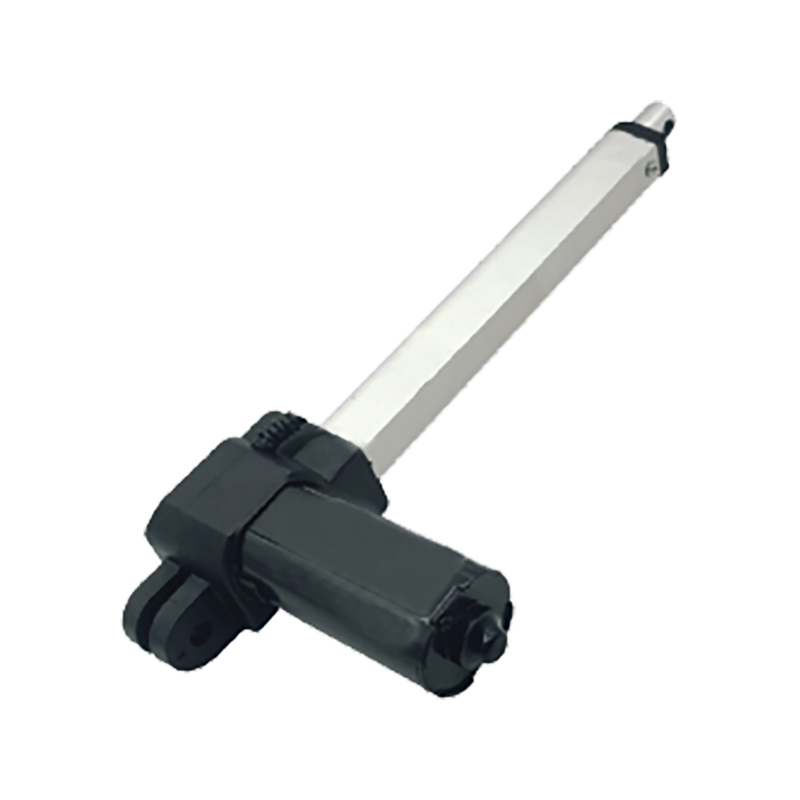
A gas-spring column adjusts instantly with zero motor hum. A motorized alternative takes several seconds and requires a power outlet at every single seat.
Instantheight change
665-1200 mmavailable lift ranges
0power drops
Why open-plan offices expose the flaws of fixed-height desks
Handing everyone in an open office a fixed-height desk is like buying one-size-fits-all clothing for a hundred people. Some people are 150 cm tall, others are 190 cm. One desk height is only truly comfortable for a lucky few.
Open-plan layouts make this worse in three very human ways:
- Bench desking: Four to six people share one long desk. A single height decision forces colleagues who differ by 30 cm in height to compromise.
- Hot-desking: Different people use the same seat every day. The second person rarely bothers to crank a manual desk up or down.
- Acoustics: People stand up to talk over background noise, then hunch over a keyboard that's still stuck at sitting height.
The working range that matters: SuZhou Skyhone’s pneumatic models offer travel ranges from 665 mm up to 1200 mm. This covers the seated and standing postures for a diverse workforce. If a desk can't go low enough, short users suffer; if it can't go high enough, tall users slouch.
What a pneumatic desk actually does (no tech degree required)
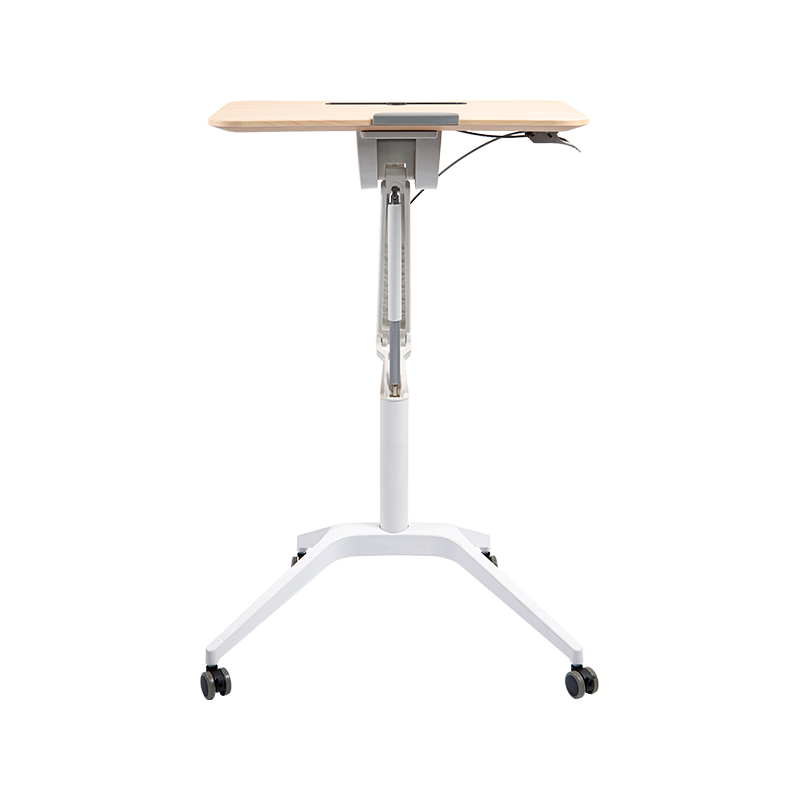
A pneumatic desk stores a compressed gas spring inside the leg column. You pull a lever, the desk glides to the height you want, and you let go. It locks in place.
The beauty is the absence of electronics. On a busy floor, avoiding wires and motors isn't just a detail—it changes the entire budget and moving plan.
- No floor boxes, no tangled cables, no dedicated circuits.
- Nothing to reset after a power cut. No weird error codes left for the next person.
- Relocating a desk is a simple two-person lift, not an electrician's job.
- The gas spring is one replaceable part, not a motor and control board combo.
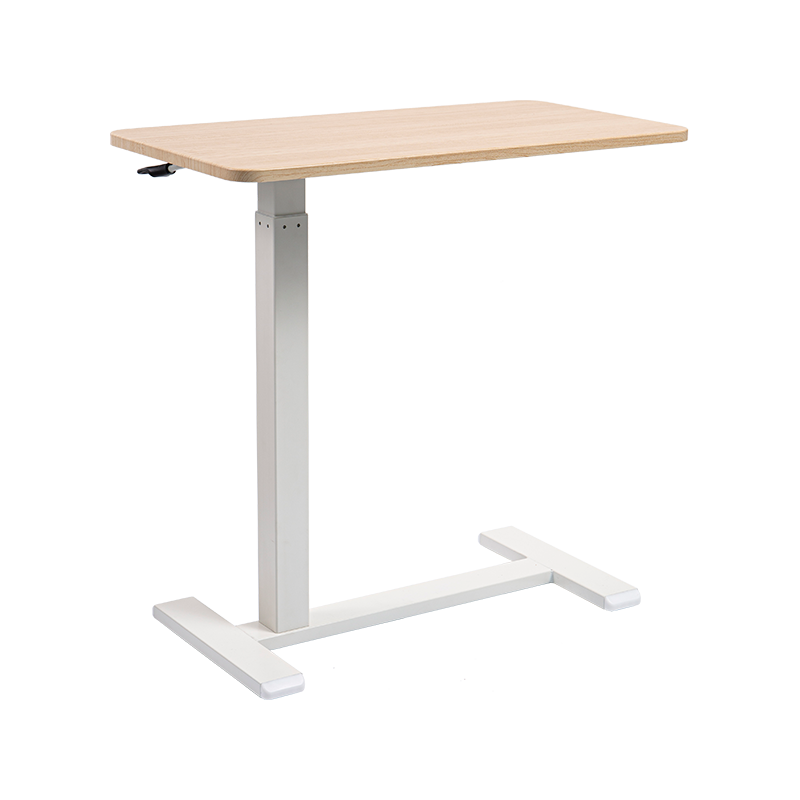
 SK01-1 iPad High-Legged Pneumatic DeskGas-spring lifting from 750 to 1060 mm with no electronics, so dense floors can switch posture in seconds.View Product →
Speed and silence: the two things that make people actually move
People only switch from sitting to standing if it's effortless. If a desk takes 20 seconds to rise, it becomes a desk people schedule and then skip.
Effort required to change posture
Then there's the noise. A motorized column under load creates a constant drone. Forty of them in one room create a background hum that people feel but stop hearing. A gas spring makes a quiet click and nothing else.
Pneumatic or motorized: the choice comes down to cabling and failure
Choose pneumatic if the floor has no power boxes and desks move a few times a day. Choose a motorized option only if you have a strict sit-stand program that demands memory presets.
| Criterion | Pneumatic (gas spring) | Motorized alternative |
| Travel speed | Instant, user-controlled | Several seconds |
| Noise | Lever click only | Motor tone under load |
| Power | None | Outlet + control box per seat |
| Failure | Spring loses charge after years | Control box or motor fault |
| Relocation | Just lift and move | Re-cable and re-commission |
The choice is rarely ideological. If a floor has a few height changes per person per day and no floor boxes, pneumatic wins on cost and simplicity. If an organization runs a monitored program, motorized earns its cables.
Leg geometry decides how a 120-desk floor actually feels
Most rollouts buy the right mechanism but the wrong leg. Sightlines, foot clearance, and lever position decide if a dense floor feels calm or cluttered—and those are decided before the purchase order.
- Measure the floor first. Look at window bands, cable routes, and how many desks sit back-to-back.
- Pick the leg form by sightline: high-leg columns look lighter down a long view; flat-leg frames hug the floor and hide more mechanism.
- Fix the lever side per bench so nobody reaches across a neighbor to change height.
- Pilot one bench of eight to twelve desks for two weeks. Record how often people actually move.
- Standardize on one or two models. Mixed frames complicate spares, service, and staff training.
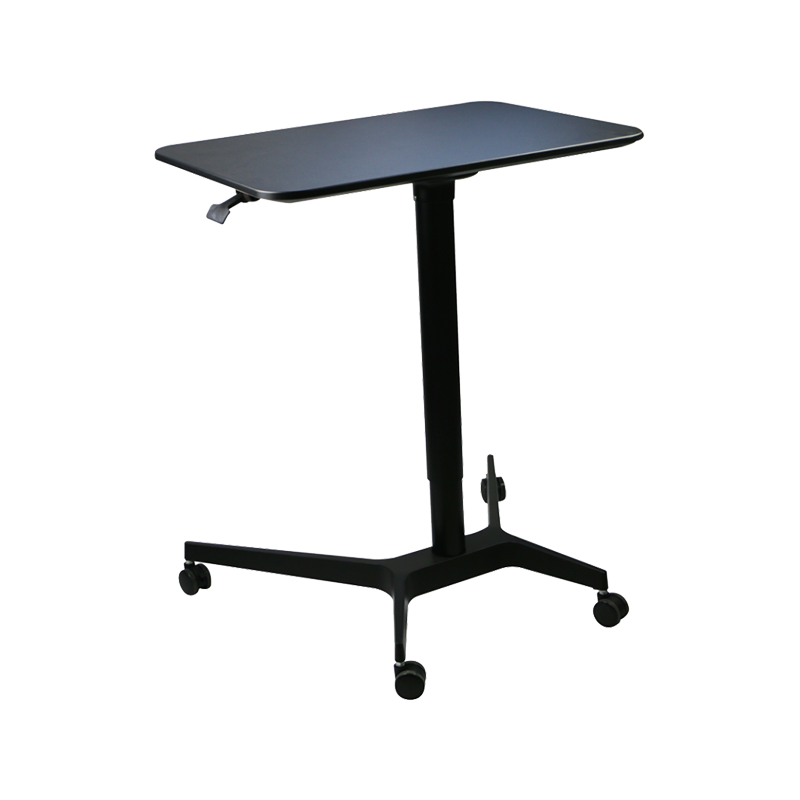 SK04 Flat-Legged Pneumatic Stand-Up DeskFlat-leg frame and 720–1200 mm gas-spring lift keep sightlines clear and foot clearance predictable in dense layouts.View Product →
What to verify before you sign the order
Test one desk for a week with the people who will actually use it. Six checks catch almost every gap.
- Load 25 kg on the rear edge and cycle the desk five times. Listen for binding.
- Measure the true top-of-desktop range with the desk loaded, not empty.
- Reach for the lever from a seated position. If you have to stand to find it, it won't get used.
- Run your hand along the column joints at desk height and look for pinch points.
- Confirm the sync bar on double-leg frames stays clear of knee space.
- Ask which component is consumable and what a replacement costs.
Questions facility teams actually ask
Do pneumatic desks need a power outlet at every seat?
No. A gas-spring frame is fully mechanical. The workstation needs no circuit, floor box, or cable tray. That single fact often pays for the upgrade on retrofit floors where adding power at 120 seats would blow the budget.
How long does a gas spring last?
Industrial gas springs handle tens of thousands of full strokes. At eight height changes a day across 250 working days, that's years of service. And it's replaced as a single part, not a whole leg assembly.
Is a pneumatic desk suitable for hot-desking?
Yes, and it's often the better choice. The desk resets in about a second with no power, no login, and no handset. The next person inherits a clean height, not someone else's saved preset.
The rule is simple: if adjusting the desk takes longer than the discomfort lasts, the desk stays where it is. Speed and silence are what turn an adjustable desk into a desk people actually adjust.


- Contact Info
-
-
 Phone+86-15950656125
-
 Email
-
 AddressRoom 1007-1, South Building, Suyue Plaza, Suzhou Industrial Park, Suzhou City, Jiangsu Province, China
-
- Products
- Follow Us
- Need help? Please contact us
Copyright ©
SuZhou Skyhone Intelligent Technology Co., Ltd.
All Rights Reserved.
Privacy
Custom Ergonomic Adjustable Office Tables Manufacturers

