

 English
  русский
  Español
  عربى
عربى 
Content
- 1 Working Principle and Core Architecture
- 2 Comparative Advantages Over Traditional Systems
- 3 Critical Selection Criteria for Optimal Performance
- 4 Industrial Applications and Use Cases
- 5 Installation Best Practices and Common Pitfalls
- 6 Maintenance Strategies for Long-Term Reliability
- 7 Future Trends in Linear Actuation Technology
- 8 Economic Impact and Total Cost of Ownership
Why are more and more companies abandoning hydraulic cylinders and switching to electric linear cylinders?
2026-05-22
Electric linear cylinders are the premier choice for precise, clean, and highly controllable linear motion in modern automation. Unlike traditional fluid-driven systems, these devices convert electrical energy directly into mechanical linear movement with exceptional accuracy and repeatability. They eliminate the inherent inefficiencies and environmental concerns of hydraulic and pneumatic systems, offering a seamless integration with modern digital control architectures. By providing exact positioning, variable speed control, and real-time force feedback, electric linear cylinders empower industries to achieve superior product quality, reduce operational costs, and implement smart manufacturing protocols with unprecedented ease.
The fundamental operating principle relies on a rotary-to-linear conversion mechanism. An electric motor drives a lead screw or ball screw, which in turn moves a piston rod or carriage along a straight path. This seemingly simple mechanism is engineered to extreme tolerances, allowing for micron-level precision. The elimination of fluid compressibility, which plagues pneumatic systems, means that the positioning is absolute and there is no lost motion. For any application requiring repeatable accuracy, cleanliness, and data integration, the electric linear cylinder stands as the definitive solution.
Working Principle and Core Architecture
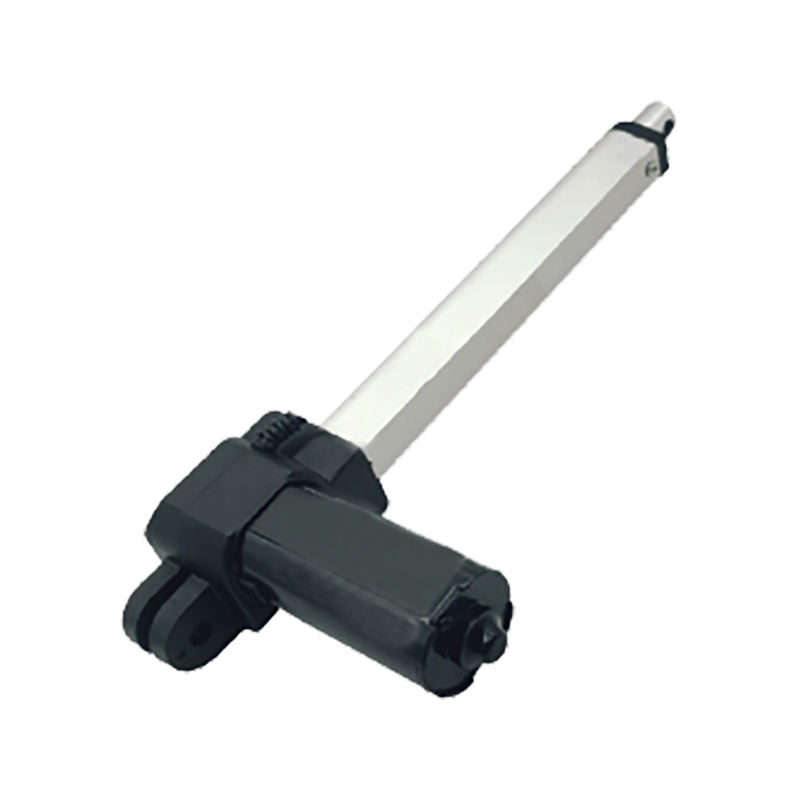
The architecture of an electric linear cylinder is designed for optimal mechanical efficiency and compactness. At its heart, the system consists of an electric motor, a coupling mechanism, a screw assembly, a nut, and a pushing rod. When the motor receives a signal from the controller, it generates rotary motion. This rotational force is transmitted through the coupling to the screw. As the screw rotates, the nut—which is prevented from rotating by the cylinder housing—travels along the threads of the screw, thereby converting the rotary input into a linear output that extends or retracts the rod.
The Screw Mechanism: Ball Screw vs. Lead Screw
The choice of screw mechanism dramatically dictates the performance envelope of the cylinder. Ball screws utilize recirculating ball bearings between the screw shaft and the nut, minimizing friction and achieving mechanical efficiency ratings approaching the upper limits. This high efficiency means a smaller motor can be used to achieve the same thrust, reducing energy consumption and heat generation. Lead screws, conversely, rely on direct sliding contact between the nut and the screw thread. While slightly less efficient, they possess a self-locking characteristic; when the motor stops, the load cannot reverse-drive the screw, which is critical for vertical applications where holding position without brake power is essential.
Motor Integration Types
- Inline Configuration: The motor is positioned parallel and connected via a timing belt or gear mechanism. This reduces the overall length of the unit, making it ideal for space-constrained installations.
- Direct Drive Configuration: The motor couples directly to the screw via a rigid or flexible coupling. This provides the highest torsional stiffness and responsiveness, crucial for dynamic applications requiring immediate acceleration.
Comparative Advantages Over Traditional Systems
To truly understand the value of electric linear cylinders, one must compare them against the legacy technologies they are replacing: pneumatic and hydraulic cylinders. While fluid power has its place in extremely heavy-duty or intrinsically safe applications, electric actuation surpasses them in almost every metric related to precision, efficiency, and total cost of ownership.
| Performance Metric | Electric Linear Cylinder | Pneumatic Cylinder | Hydraulic Cylinder |
|---|---|---|---|
| Positioning Accuracy | Extremely High | Low | Moderate |
| Energy Efficiency | High (Power only when moving) | Low (Continuous compressor run) | Low (Continuous pump run) |
| Environmental Impact | Clean (No fluids) | Potential air leaks | Risk of fluid leaks |
| Speed Control | Fully Variable | Limited | Variable but complex |
| Maintenance Requirement | Low | High (Seals, air lines) | Very High (Filters, fluids, seals) |
As illustrated, pneumatic systems suffer from the compressibility of air, making mid-stroke positioning virtually impossible without complex and expensive locking mechanisms. Electric cylinders offer infinite positional control, allowing them to stop at any point along the stroke with absolute precision. Furthermore, pneumatic systems require a constantly running compressor to maintain pressure, bleeding energy even when the actuators are idle. Electric cylinders only draw power when actively moving or holding a load against gravity, resulting in significant long-term energy savings. Hydraulics, while capable of immense force, pose severe environmental risks due to fluid leaks and require extensive plumbing, pumps, and heat exchangers.
Critical Selection Criteria for Optimal Performance
Selecting the wrong actuator can lead to premature failure, inadequate performance, or wasted capital. Proper sizing and selection of an electric linear cylinder require a comprehensive understanding of the application's kinetic and environmental demands. It is not enough to simply match the maximum force; the dynamic forces during acceleration and deceleration must be calculated precisely.
Force and Velocity Calculations
The thrust generated by the cylinder is a product of the motor's torque and the screw lead. A smaller screw lead provides greater thrust but reduces the linear speed for a given motor RPM. Conversely, a larger lead increases speed but sacrifices thrust and resolution. Engineers must plot the application's required force against its required velocity to ensure the operating point falls within the actuator's performance envelope. Failing to account for peak dynamic forces during emergency stops can result in mechanical failure or missed positional targets.
Duty Cycle and Thermal Management
Unlike pneumatic cylinders that can run to failure with minimal thermal concerns, electric linear cylinders generate heat primarily through motor operation and screw friction. The duty cycle—the ratio of operating time to rest time—must be carefully evaluated. Operating an electric cylinder beyond its rated duty cycle will cause the motor windings to overheat, degrading the insulation and leading to rapid motor failure. For high-cycle applications, selecting a cylinder with a larger frame size or one equipped with external cooling fins is imperative.
Environmental Protection Levels
The operating environment dictates the physical construction and sealing of the cylinder. Ingress of dust, moisture, or corrosive chemicals will quickly destroy the precision screw mechanism and motor bearings. Standard industrial environments typically require moderate ingress protection, while food processing or washdown environments demand high-level protection with specialized coatings to withstand corrosive cleaning agents.
Industrial Applications and Use Cases
The versatility of electric linear cylinders has led to their adoption across a vast spectrum of industries. Wherever there is a need to push, pull, lift, or position a load with accuracy, these devices are deployed to replace manual labor or outdated fluid power systems.
Automotive Manufacturing and Assembly
In automotive assembly lines, the demand for flexibility and precision is paramount. Electric cylinders are heavily utilized in spot welding guns, where they provide consistent electrode force, ensuring high-quality welds without burning through the sheet metal. They have entirely replaced pneumatic weld guns in modern facilities. They are also critical in automated paint lines, where the cylinder's clean operation eliminates the risk of oil contamination that pneumatic systems pose, guaranteeing flawless paint finishes.
Food Processing and Packaging
The food industry mandates strict hygiene standards. Pneumatic systems risk introducing compressed air contaminants, while hydraulic systems risk catastrophic oil leaks. Electric linear cylinders, specifically those with high ingress protection ratings and stainless-steel components, are the standard for product sorting, multi-axis pick-and-place operations, and precision filling mechanisms. Their ability to provide gentle, force-controlled contact ensures delicate food items are not crushed during handling.
Medical and Laboratory Automation
In medical device manufacturing and clinical diagnostics, precision is measured in microns. Electric linear cylinders drive the axes of automated liquid handling systems, moving pipettes with exacting accuracy to ensure test results are not skewed by volumetric errors. They are also integral to patient handling equipment, such as hospital beds and surgical tables, where quiet, smooth, and reliable motion is just as critical as precise positioning.
Installation Best Practices and Common Pitfalls
Even the highest quality electric linear cylinder will underperform or fail prematurely if installed incorrectly. Mechanical alignment is the single most critical factor in the longevity of a linear motion system. Misalignment introduces side-loading forces that the cylinder is not designed to handle, leading to premature wear of the screw, nut, and guide bearings.
- Ensure Absolute Parallelism: The cylinder must be mounted perfectly parallel to the direction of travel. Even slight angular deviations will cause the rod to bind, generating excessive friction and heat.
- Avoid Moment Loads: The piston rod is designed to handle axial thrust, not bending moments. Never use the rod to support off-center loads without external linear guides.
- Utilize Flexible Couplings: When connecting the cylinder rod to the load, always use a floating joint or flexible coupling. This accommodates minor mechanical tolerances and prevents binding.
- Verify Electrical Phase: Before powering the system, verify the motor encoder and power wiring. Incorrect phase sequencing can cause the motor to drive the cylinder into its mechanical end stops, causing severe impact damage.
- Implement Soft Limits: In the motion controller, program soft limits to decelerate the cylinder before it reaches the physical hard stops, drastically extending the life of the internal shock absorbers.
By adhering strictly to these installation protocols, engineers can eliminate the vast majority of field failures. Proper mechanical isolation of side loads is not optional; it is a fundamental requirement for preserving the precision and mechanical integrity of the actuator.
Maintenance Strategies for Long-Term Reliability
While electric linear cylinders require significantly less maintenance than their fluid power counterparts, they are not entirely maintenance-free. A proactive maintenance strategy ensures consistent performance and prevents unexpected downtime in automated processes.
Lubrication Management
The screw and bearings require adequate lubrication to minimize friction and prevent corrosion. Over time, the grease will break down due to mechanical shearing and thermal cycling. The re-lubrication interval depends on the operating speed, load, and ambient temperature. Using the incorrect type of grease—such as one with incompatible thickeners—can cause the existing lubricant to separate and lose viscosity, leading to rapid wear. Always follow the manufacturer's specific lubrication specifications.
Monitoring Backlash and Positional Drift
Over the lifecycle of the actuator, the mechanical components will experience wear, particularly in the nut and screw interface. This wear manifests as backlash—unwanted mechanical play when the direction of motion is reversed. Regularly measuring the backlash using a dial indicator allows maintenance teams to track wear trends. When backlash exceeds the application's tolerance, it is far more cost-effective to replace the nut assembly than to wait for a catastrophic screw failure.
Vibration Analysis and Acoustic Monitoring
In advanced predictive maintenance programs, vibration sensors attached to the cylinder housing can detect the early onset of bearing failure or screw misalignment. A healthy electric linear cylinder operates with a smooth, consistent acoustic signature. The emergence of grinding, squealing, or irregular vibrations indicates internal damage or contamination, necessitating immediate inspection before a complete structural failure occurs.
Future Trends in Linear Actuation Technology
The evolution of electric linear cylinders is intrinsically linked to the broader trends of Industry and the Internet of Things. As manufacturing processes become more intelligent, the components within them must evolve from simple mechanical workhorses into active participants in the digital ecosystem.
Integrated Sensing and Edge Computing
Modern electric linear cylinders are increasingly being equipped with onboard sensors that monitor force, velocity, position, temperature, and vibration. This data is processed at the edge, allowing the cylinder to autonomously report its health status and predict remaining useful life. For example, if a cylinder experiences a gradual increase in thrust required to move a standard load, the integrated sensor can alert the central control system that the mechanism is suffering from contamination or lubrication failure, long before the motor overheats.
Miniaturization and High-Density Materials
The demand for smaller, faster, and more powerful automation equipment is driving the miniaturization of linear actuators. Advanced composite materials and aerospace-grade aluminum alloys are replacing traditional steel components, significantly reducing the moving mass of the cylinder. Lower moving mass allows for drastically higher acceleration rates, reducing cycle times in high-speed assembly operations. Additionally, the development of high-energy-density rare-earth magnets allows motors to generate immense torque in exceptionally compact footprints.
Digital Twins and Virtual Commissioning
Before a physical machine is even built, engineers can now simulate the exact dynamic behavior of electric linear cylinders within a digital twin environment. These advanced software models incorporate the mechanical losses, friction coefficients, and thermal characteristics of the actuator. This allows for virtual commissioning, where control logic is tested and optimized against the simulated cylinders, ensuring that the physical system will perform exactly as predicted upon first power-up, drastically reducing development timelines and engineering costs.
Economic Impact and Total Cost of Ownership
When evaluating motion control solutions, purchasing decisions must look beyond the initial acquisition cost. While an electric linear cylinder typically carries a higher upfront price tag compared to a pneumatic cylinder, its total cost of ownership over a multi-year lifecycle is substantially lower. The economic advantages stem from reduced energy consumption, eliminated plumbing infrastructure, and decreased maintenance requirements.
Pneumatic systems suffer from chronic air leaks throughout their hose networks and fittings, which can account for massive energy waste in a large facility. Electric cylinders operate with closed-loop energy efficiency, drawing power only when performing work, resulting in operational energy savings that often pay for the upgrade within a short timeframe. Furthermore, the elimination of compressors, dryers, and air lines frees up valuable factory floor space and removes the noise pollution associated with pneumatic systems, contributing to a safer and more productive work environment.
Finally, the precision of electric actuators reduces material waste. A pneumatic system that over-travels and crushes a delicate component, or under-travels and creates a defective assembly, incurs hidden costs in scrap and rework. The exact positioning capability of electric linear cylinders ensures that every cycle is executed flawlessly, driving overall equipment effectiveness upward and cementing their status as the most economically viable choice for advanced automation.

- Contact Info
-
-
 Phone+86-15950656125
 -
 Email
Email -
 AddressRoom 1007-1, South Building, Suyue Plaza, Suzhou Industrial Park, Suzhou City, Jiangsu Province, China
-
- Products
- Follow Us
- Need help? Please contact us
Copyright ©
SuZhou Skyhone Intelligent Technology Co., Ltd.
All Rights Reserved.
Privacy
Custom Ergonomic Adjustable Office Tables Manufacturers

