

 English
  русский
  Español
  عربى
عربى 
Content
- 1 01 Electric and Pneumatic Standing Desks: How the Drive System Changes Everything
- 2 02 Load Capacity and Stability in Electric vs Pneumatic Standing Desks
- 3 03 Adjustment Speed: The Electric vs Pneumatic Standing Desk Difference You Feel Daily
- 4 04 Operating Costs and Maintenance: Electric Desk vs Pneumatic Desk
- 5 05 Match the Desk Type to the Workspace, Not the Other Way Around
- 6 Frequently Asked Questions
Electric vs Pneumatic Standing Desks: How to Choose the Right One for Your Office
2026-09-08
When a 36-seat customer service center replaced fixed-height desks with sit-stand workstations, the buying committee brought in two demo units: one electric and one pneumatic. Both adjusted across the same 60-125 cm height range, and both felt stable with dual monitors clamped to the surface. After two weeks of live use, the usage logs disagreed with the spec sheets: the pneumatic desk was adjusted nearly four times as often, because nobody had to wait for a motor.
That gap is not about build quality. It is about how the drive mechanism shapes daily behavior, which is why learning how to choose between electric and pneumatic standing desks means looking past the spec sheet at load, adjustment frequency, noise, energy, and maintenance. At Skyhone, SuZhou Skyhone Intelligent Technology Co., Ltd., both drive families share the same production floor, so this comparison is grounded in the realities of manufacturing both types rather than in marketing one of them.
01 Electric and Pneumatic Standing Desks: How the Drive System Changes Everything
The drive system determines speed, load capacity, energy use, and the way a desk fails, so start there instead of comparing frames and finishes.
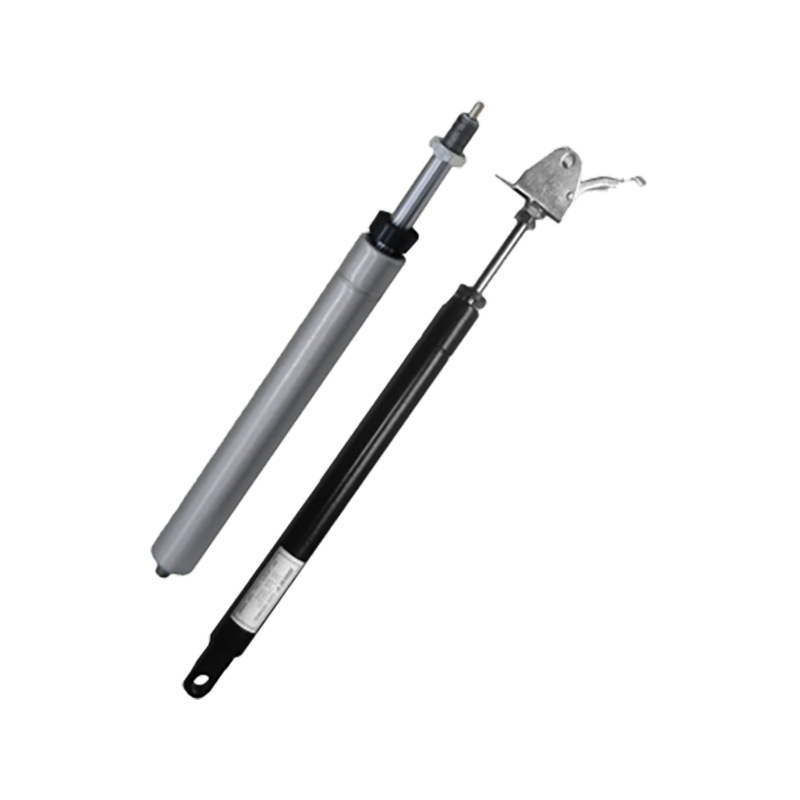
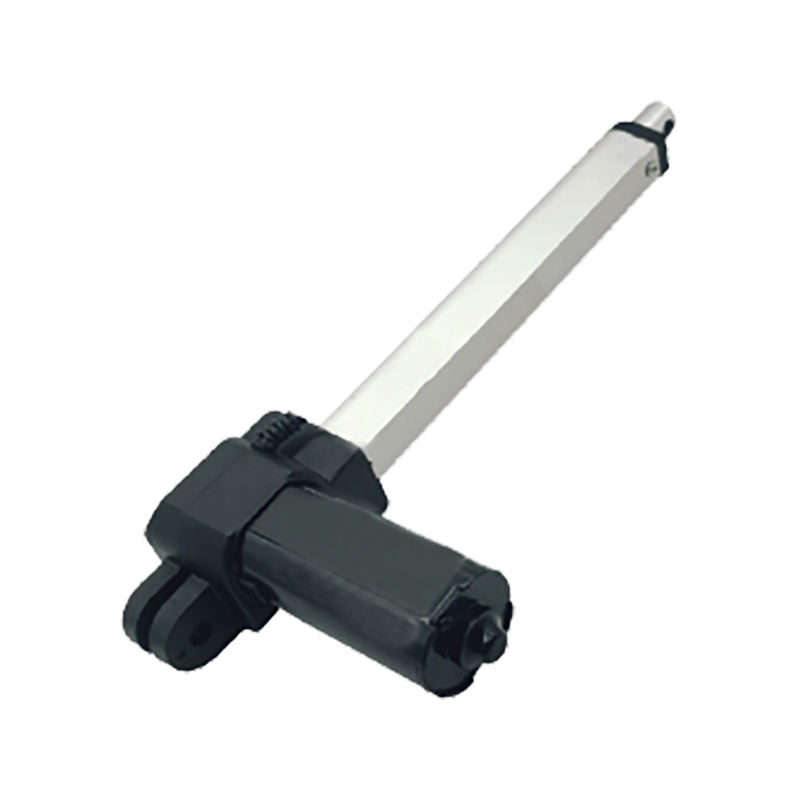
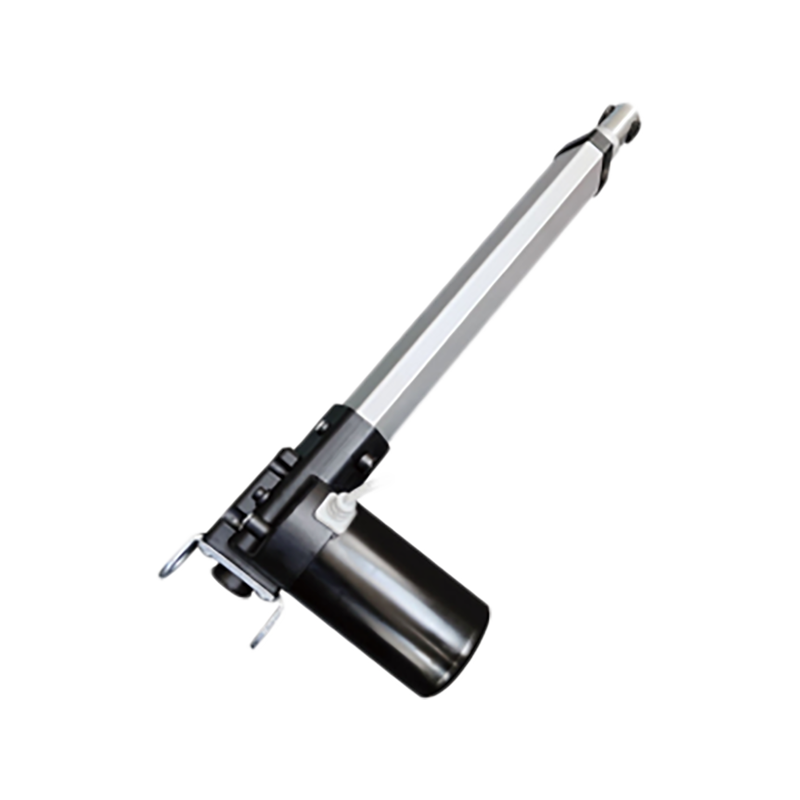
An electric standing desk lifts the tabletop through a DC motor and a linear actuator, controlled by a push-button panel. A pneumatic standing desk uses a nitrogen-charged gas spring pre-tuned to counterbalance the tabletop and the equipment on it; a mechanical release lever lets the user move the surface by hand in real time.
Core Concept
A pneumatic standing desk treats the user as the motor. The gas spring carries the weight; the person supplies the movement. An electric standing desk outsources movement to an actuator, and the person supplies only the button press.
Three operating consequences follow from that single difference:
- Electric desks deliver constant creep speed with fine 1 cm positioning and memory presets, but they need mains power, a controller, and motor maintenance.
- Pneumatic desks adjust instantly and silently, need no wiring and draw no standby electricity, and position continuously instead of in fixed steps.
- Both reach the same 60-125 cm height range on Skyhone's adjustable-height desk lines, so load and usage frequency become the variables that separate them.
02 Load Capacity and Stability in Electric vs Pneumatic Standing Desks
Load rating is a purchase gate, not a ranking; the correct mechanism is the one specified for the weight it will hold daily.
A fixed workstation with a desktop tower, a 34-inch monitor arm, and roughly 120 kg of total load belongs on a dual-motor electric desk. No pneumatic spring makes that configuration more convenient, because the electric actuator carries the load without strain and holds position against a heavy, top-heavy setup. That is the role of Skyhone's electric height-adjustable desk line.
 Skyhone Electric Height-Adjustable Desk for Heavy WorkstationsThis dual-motor electric desk suits heavy setups like a desktop tower and monitor arm, offering motorized lifting and stable support for top-heavy loads up to around 120 kg.View Product →
On the pneumatic side, the gas spring is matched to the combined weight of the tabletop and the typical working load. Because Skyhone builds gas springs as a separate product line, load matching and spring replacement remain straightforward after purchase. Stability, notably, is a frame property rather than a drive property: the same triangular mechanical structure is applied across both families, so the drive system changes how force is delivered, not how the legs resist deflection.
60-125 cm usable height range shared by both drive families - the spec that does not separate them
03 Adjustment Speed: The Electric vs Pneumatic Standing Desk Difference You Feel Daily
Frequent height changes favor pneumatic desks, because a 2-3 second one-hand gesture gets used far more often than a 15-second motor cycle.
Full sitting-to-standing transition time
Pneumatic
3 s
Electric
15 s
Linear scale; 15 seconds is shown at full width. Lower is better.
Comparison of Pneumatic vs Electric Desk Adjustment TimeThis section highlights how pneumatic desks move silently and quickly, reducing noise and eliminating electronics, which matters in shared offices where motor hum is disruptive.View Product →
At ten height changes per day, an electric desk spends about two and a half minutes moving, while a pneumatic desk spends about thirty seconds - and every pneumatic move is silent. In shared offices, the absence of motor hum matters as much as the time saved: no noise in calls, no controller to hunt for, no electronics to damage when a desk is shared across shifts. The operating logic behind those numbers is laid out in Skyhone's field notes on how a pneumatic height-adjustable desk improves work efficiency.
3 s
Pneumatic full height change
15 s
Electric full height change
0 kWh
Pneumatic desk energy draw
45-55 dB
Electric motor noise during travel
04 Operating Costs and Maintenance: Electric Desk vs Pneumatic Desk
Total lifetime cost is closer than most buyers expect; the real differences are the failure mode and the energy profile.
An electric desk draws power only while moving, so normal use lands around 0.05-0.1 kWh per day, less than a desktop computer left in sleep mode overnight. Its wear items are the motor, controller, and switch, and a failed component is swapped rather than scrapped. A pneumatic desk uses zero electricity, and its only wear item is the gas spring, which loses charge gradually over years of use.
Electric Operating Profile
- 0.05-0.1 kWh per day during normal use
- Wear items: actuator, controller, switch
- Sudden failure signature: desk stops moving
- Memory presets and fine positioning included
Pneumatic Operating Profile
- 0 kWh, no mains connection required
- Wear item: gas spring charge and seal
- Gradual failure signature: slow height drift
- Silent, continuous, load-tuned movement
Procurement teams should also compare the replacement path. A desk whose manufacturer also produces the actuator or the spring, rather than buying it in, keeps spare parts available for the life of the product line.
05 Match the Desk Type to the Workspace, Not the Other Way Around
No single drive system wins every room; the workspace dictates the mechanism, and honest advice starts by naming that variable.
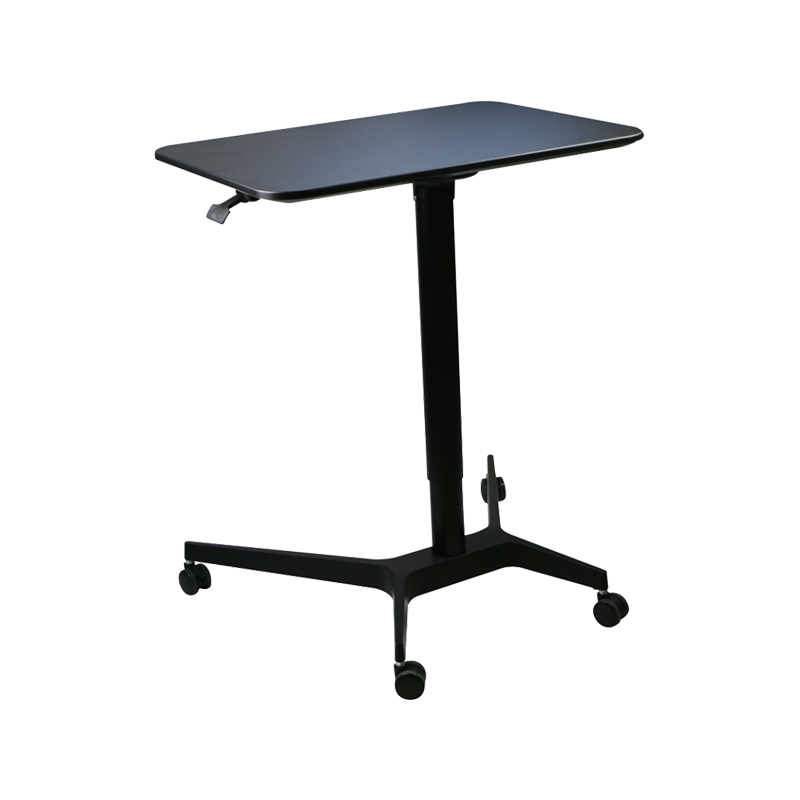 SK04 Stand-Up Flat-Legged Pneumatic Height-Adjustable DeskThis mobile desk uses a gas spring for quick manual height changes from 720 to 1200 mm, with locking casters for stability and easy repositioning.View Product →
- Hot-desking and shared stations - pneumatic wins on speed, silence, and the absence of cables and controllers at the desk.
- Heavy fixed workstations - electric wins on load, because monitor arms, desktop towers, and large screens push past the comfortable range of most gas springs.
- Shop floors, workshops, and retail counters - pneumatic wins on environmental tolerance; no outlet, controller, or motor survives industrial cleaning as well as a sealed gas spring.
- Quiet and executive rooms - pneumatic wins on silence, which matters when an adjustable desk sits within two meters of a conference call microphone.
- Frequent sit-stand switchers - pneumatic wins on interaction cost, because a three-second gesture becomes a habit while a fifteen-second wait becomes a reason to stay seated.
Put the two drive families side by side and the selection table collapses to a few rows:
| Selection criteria | Electric desk | Pneumatic desk |
| Full adjustment time | 10-15 s | 2-3 s |
| Typical load capacity | 80-125 kg | 60-90 kg |
| Energy use | 0.05-0.1 kWh/day | Zero |
| Noise during travel | 45-55 dB | Silent |
| Positioning presets | Yes | No, continuous manual |
| Power connection needed | Yes | No |
| Primary wear item | Actuator or controller | Gas spring |
| Best-fit workspace | Heavy fixed stations | Shared, high-frequency, power-free zones |
The figures are typical design targets for commercial desk lines, not maximum offered ratings; verify against the specific model you order.
The desk that gets used is the desk you should buy.
Choose electric when the load is heavy, the workstation is fixed, and height changes are infrequent. Choose pneumatic when people will change height often in shared or power-free spaces. Most commercial offices end up with a deliberate mix of both - and that is the right answer.
Frequently Asked Questions
Which type lasts longer, an electric or a pneumatic standing desk?
Both are serviceable, and the practical difference is failure mode rather than total life. Electric desks fail suddenly when a motor or controller stops; pneumatic desks degrade gradually as the gas spring loses charge. Skyhone builds its own linear actuators and gas springs, so either component can be replaced without changing the frame or the desktop. In heavily shared environments, the simpler mechanism of a pneumatic desk tends to survive rougher daily handling.
Can a pneumatic standing desk support a dual-monitor setup?
Yes, when the gas spring is specified for the actual load. A dual-monitor clamp with two 24-inch displays and a laptop normally sits inside the rated capacity of a pneumatic desk. A 34-inch monitor arm combined with a desktop tower may exceed that range, so weigh the real equipment and order the spring matched to that number.
Do electric standing desks consume a lot of power?
No. The motor runs only during height changes, so a typical workday with ten adjustments consumes roughly 0.05 kWh, about the same as a small LED lamp left on for an hour. Standby draw from the controller is negligible on modern designs.
Because adjustment frequency is the controlling variable in shared spaces. A pneumatic desk changes height in 2-3 seconds with one hand, needs no power at the desk, and has no controller for users to damage. Those properties reduce queue time, noise, and maintenance exactly where desks change users several times a day.


- Contact Info
-
-
 Phone+86-15950656125
 -
 Email
Email -
 AddressRoom 1007-1, South Building, Suyue Plaza, Suzhou Industrial Park, Suzhou City, Jiangsu Province, China
-
- Products
- Follow Us
- Need help? Please contact us
Copyright ©
SuZhou Skyhone Intelligent Technology Co., Ltd.
All Rights Reserved.
Privacy
Custom Ergonomic Adjustable Office Tables Manufacturers

