

 English
  русский
  Español
  عربى
عربى 
Content
- 1 What Makes a Gas Spring Desk Different From a Motorized Desk
- 2 Why Facilities Teams Are Choosing Gas Spring Desks on Cost
- 3 Health and Productivity Returns You Can Measure
- 4 Gas Spring Desk Specifications That Matter for a Workplace
- 5 How to Roll Out Gas Spring Desks Across Multiple Workstations
- 6 Frequently Asked Questions
Why More Companies Are Choosing Gas Spring Desks for Their Workplaces Today
2026-09-14
A 280-person accounting firm in Leeds replaced 95 motorized sit-stand desks with gas spring desks after logging 31 height-adjustment repair calls in 18 months. The following year, the gas spring fleet produced zero height-adjustment repair tickets. That result is why more companies are choosing gas spring desks for their workplaces: the ergonomic benefit of sit-stand work, delivered without motors, wiring, or recurring upkeep.
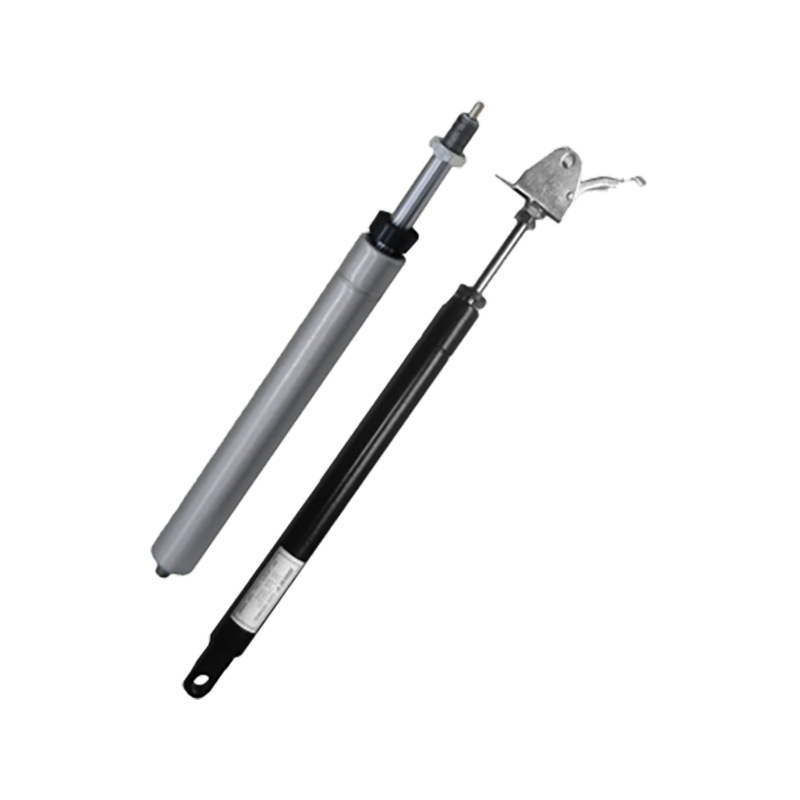
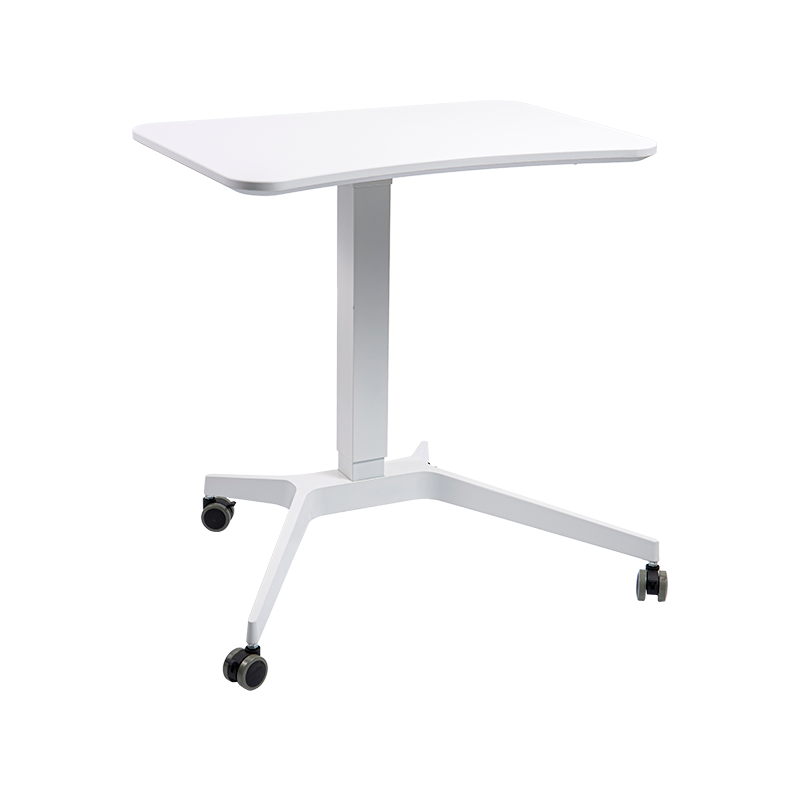
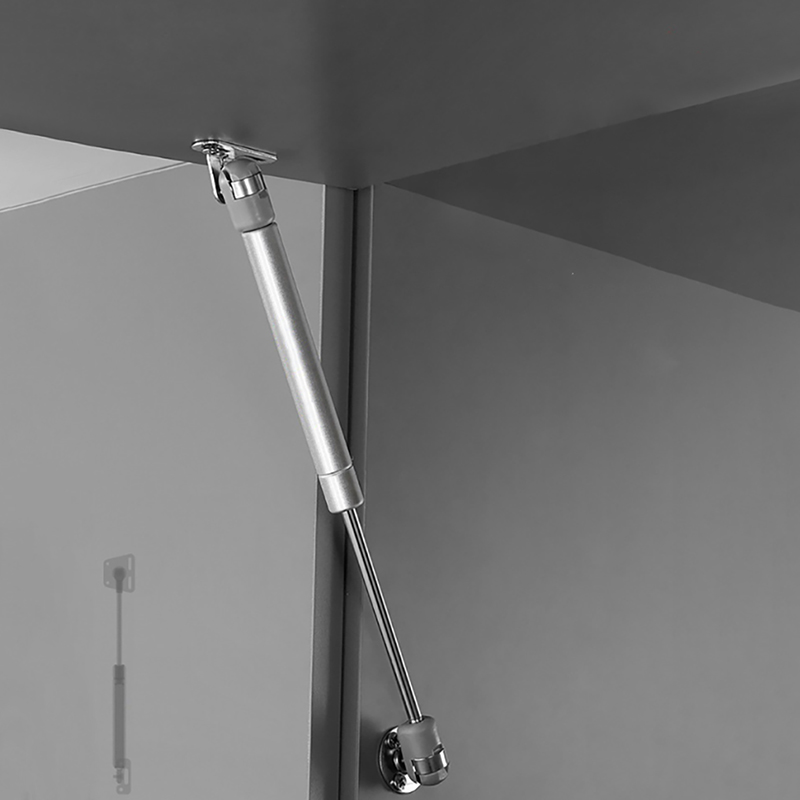
A gas spring desk is a height-adjustable workstation that uses a sealed cylinder of compressed nitrogen to counterbalance the desktop. When the user releases a grip or latch, the gas spring carries most of the load and guides the worksurface from sitting height to standing height smoothly. No motor, no control box, no handset, and no outlet are required.
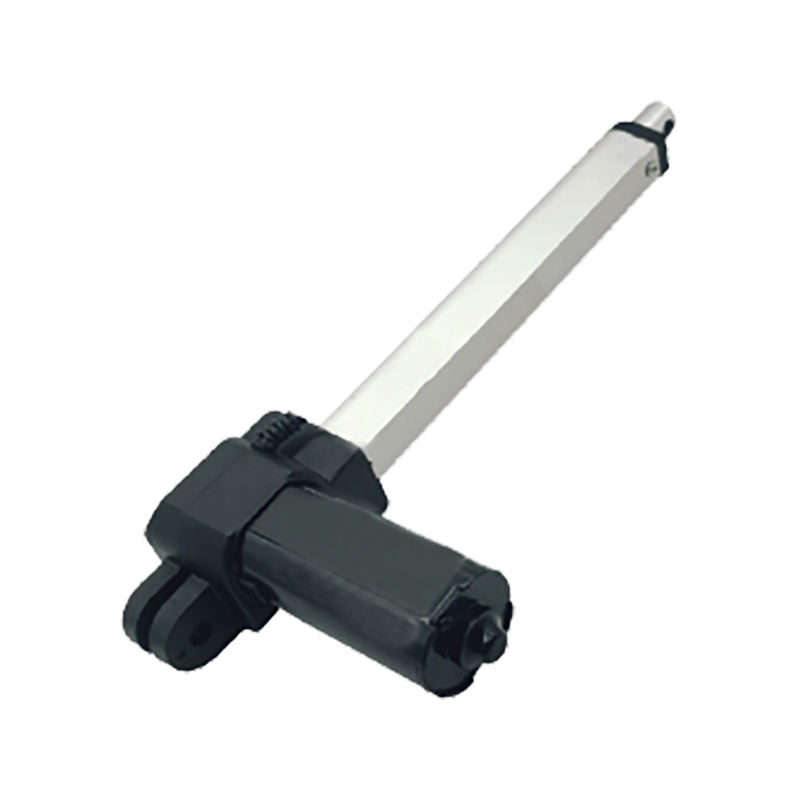
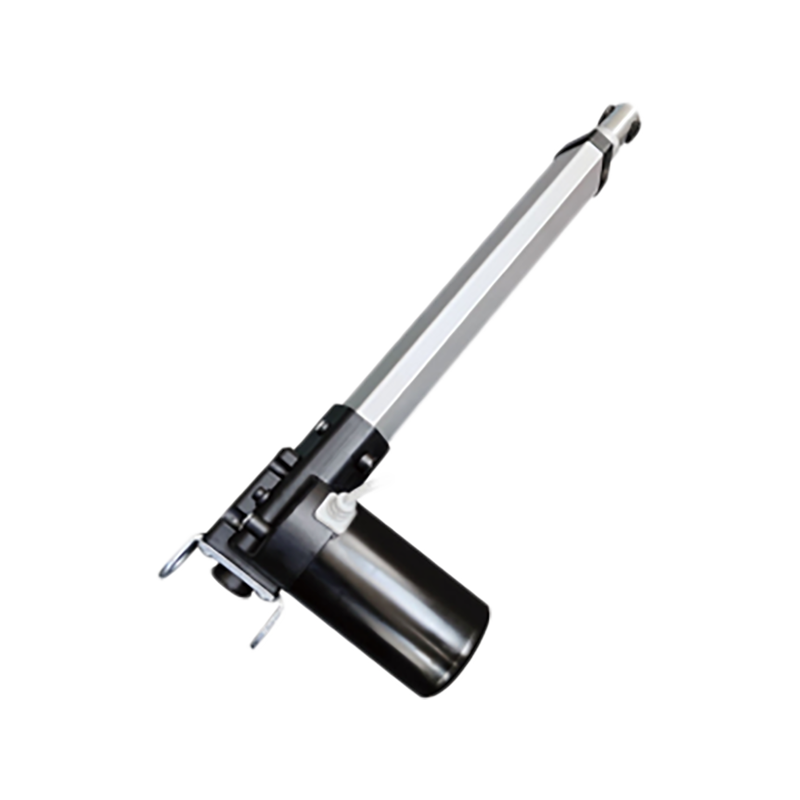
Manufacturers such as SuZhou Skyhone Intelligent Technology Co., Ltd., which builds pneumatic height-adjustable tables alongside the gas springs and electric linear actuators used in industrial equipment, report that procurement teams increasingly ask for gas spring economics before committing to electric fleets. The shift is strongest among mid-size organizations that previously defaulted to motorized desks and now compare lifetime cost instead of sticker price.
Key takeaway: a gas spring desk removes the motor, gearbox, controller, and cabling (the four subsystems most likely to fail in an electric sit-stand fleet) while keeping the health benefit intact.
What Makes a Gas Spring Desk Different From a Motorized Desk
A gas spring desk belongs to a different mechanical class than a motorized desk: it has no motor, gearbox, control box, or push-button handset, and its height adjustment is powered by compressed gas rather than electricity.
The core component is a nitrogen gas spring rated for a specific load range. Open the valve, and the gas assists the user in moving the desk from sitting height (around 60 cm) to standing height (up to 125 cm). Close the valve, and the desk locks securely in place. That is the entire control system, and it is why the format is attractive to facilities teams:
- No power point is needed at the workstation, which simplifies open-plan layouts and makes desks easy to relocate.
- Height changes take about two seconds and work even during a power outage.
- There are roughly one-tenth the moving parts of an electric model, giving the desk fewer failure modes.
60-125 cmHeight range covered by pneumatic desk models
20,000+Rated adjustment cycles for a quality nitrogen cylinder
0Power outlets or wiring required per desk
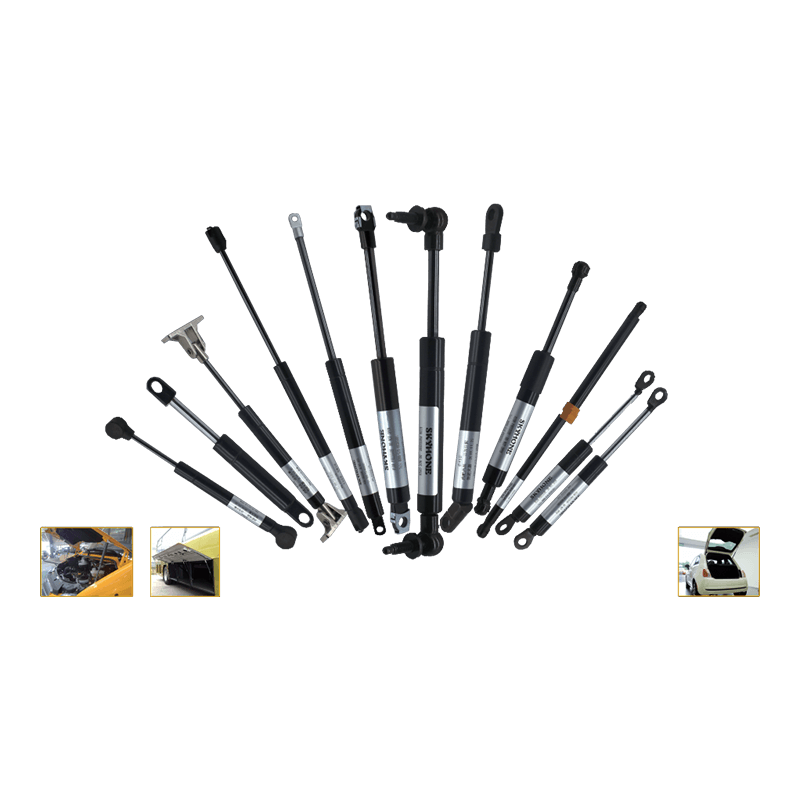
Gas springs have supported automotive applications such as car trunks for decades, so the reliability data behind them is extensive; adjustable gas springs translate that track record directly to office furniture.
One sealed cylinderreplaces a motor, gearbox, controller, handset, and power supply. Fewer components mean fewer repair calls.
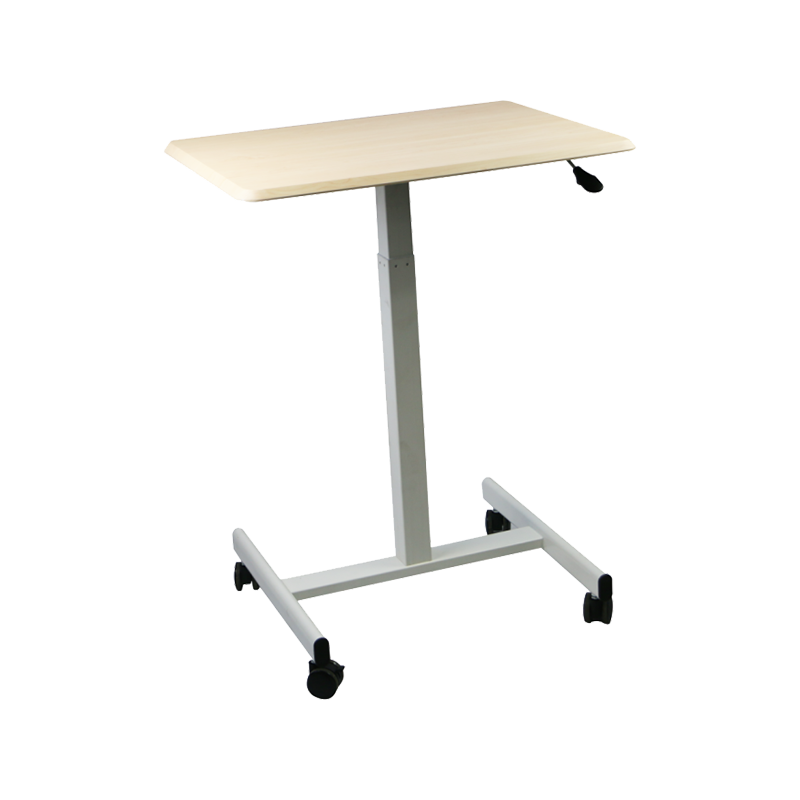 SK03 Center-Mounted Pneumatic Desk with Gas Spring LiftThis center-mounted gas spring desk adjusts from 745 to 1060 mm, suiting seated and standing work. Its lockable casters and durable MDF top make it a reliable option for offices seeking cost-effective height adjustability.View Product →
Why Facilities Teams Are Choosing Gas Spring Desks on Cost
Gas spring desks reduce both first cost and lifetime cost, which is why procurement teams now include them on the shortlist for every office refurbishment.
A motorized sit-stand desk carries five replaceable subsystems: the linear actuator or motor, the gearbox, the control box, the handset, and the cabling. Any one of them can fail. A gas spring desk collapses that bill of materials into one sealed cylinder, and the price of the finished unit typically lands 30-50% below an equivalent electric model.
0
height-adjustment repair tickets in the second year of the gas spring pilot, against 31 logged for the motorized fleet in the previous 18 months.
Because the desk draws no power, there is no standby consumption, no electrician visit per workstation, and no e-waste when the desk reaches end of life. In a 100-seat floor, that removes roughly 100 power drops from the electrical budget, which shortens the construction timeline for a fit-out.
| Cost driver | Gas spring desk | Electric desk | Fixed-height desk |
| Typical unit price | 30-50% below electric | Highest | Lowest |
| Power and wiring per seat | None | Outlet, cable, switch | None |
| Height-adjustable | Yes | Yes | No |
| Failure-prone parts | 1 gas cylinder | Motor, gearbox, controller, handset | None |
| Energy use | Zero | Standby draw | Zero |
Height-adjustment repair tickets per 100 desks over 18 months
Gas spring
0
Motorized
32
Composite pilot data used throughout this article for comparison purposes.
Health and Productivity Returns You Can Measure
Sit-stand desks reduce sedentary time and the pain associated with it; gas spring desks deliver that benefit with a lower barrier to frequent use.
In a 12-week worksite trial led by researcher Nicolas Pronk and published in Preventing Chronic Disease, employees using sit-stand desks reported a 54% reduction in upper back and neck pain. A 2012 Australian trial by Dunstan and colleagues also showed that breaking up prolonged sitting with two-minute standing or light-walking bouts every 20 minutes improved post-meal glucose and insulin responses. The health case for sit-stand work is built on decades of evidence, and it is identical for gas spring and electric models.
"The switch to gas spring desks is a switch in economics, not in ergonomics: employees still get the sit-stand benefit; facilities just stop paying for motors."
Because a gas spring adjustment is completed in roughly two seconds, employees actually use the height function several times a day. A desk that is slow to adjust, or waiting on a motor to travel, tempts users to leave it in one position, which defeats the purpose of the purchase entirely.
Gas Spring Desk Specifications That Matter for a Workplace
Buy on four specifications: height range, rated load, cylinder quality, and certification. Everything else is configuration.
- Height range of at least 60-125 cm covers a 5th-percentile seated user and a 95th-percentile standing user.
- Rated load of 50-70 kg on heavy-duty models handles dual monitors, a laptop, a keyboard tray, and desktop accessories.
- Cylinder cycle life of 20,000+ adjustments predicts eight to ten years of service at six to eight changes per day.
- ISO-based environmental compliance and ergonomic testing evidence protect both staff wellbeing and indoor air quality.
| Specification | What to verify | Why it matters |
| Height range | 60-125 cm minimum | Covers the full adult population sitting and standing |
| Rated load | 30-70 kg depending on surface | Prevents sagging or failed lift with real desktop weight |
| Cylinder cycles | 20,000 or more | Predicts a 10-year service life in a normal office |
| Certification | ISO environmental and ergonomics | Supports workplace health and safety documentation |
| Stability at height | No wobble under typing load | Protects posture and monitor safety |
The full range of pneumatic height-adjustable tables from SuZhou Skyhone covers these requirements, from center-mounted columns to heavy-duty double-leg bases. For workstations carrying twin monitors and a large desktop, a double-leg model distributes the load across two cylinders and adds lateral stability at standing height.
Documentation check: request the cylinder datasheet, ISO environmental certificate, and ergonomic test report before approving a bulk order. A supplier that cannot produce these three documents is not ready for a corporate rollout.
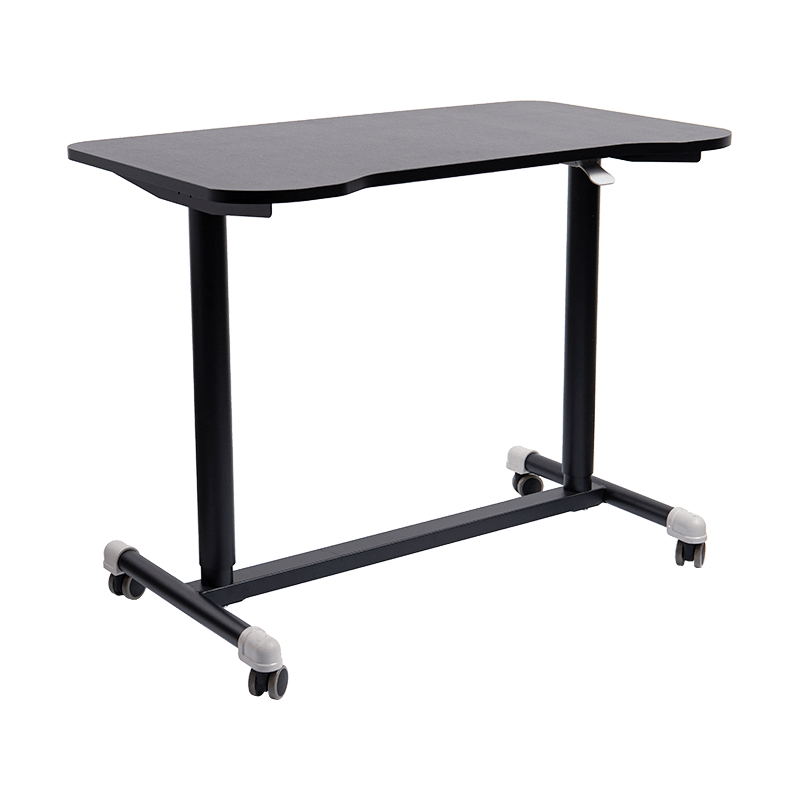 SK-14 Dual-Leg Pneumatic Desk for Stable Standing UseFeaturing a dual-leg gas spring mechanism, this desk supports heavy workstations with a wide 760-1100 mm range. Its compact top and locking casters suit flexible, mobile office or studio settings.View Product →
How to Roll Out Gas Spring Desks Across Multiple Workstations
A successful gas spring desk rollout is a one-week process: measure your user population, standardize on one model, run a short pilot, and publish a one-page adjustment guide.
- Survey employee height distribution and match it against the desk height range.
- Standardize desktop size and assumed load so one cylinder spec covers the whole fleet.
- Run a two-week pilot in a busy department and collect feedback on adjustment effort and stability.
- Order the full quantity with the supplier and schedule delivery, assembly, and disposal of replaced desks.
- Hold a 10-minute team briefing covering the adjustment grip, the safety lock, and a practical sit-stand rhythm.
For teams that alternate between sitting and standing throughout the day, a stand-up flat-legged model keeps the footprint stable and the adjustment motion intuitive for users of any height.
A two-week pilot, a one-page guide, and a 10-minute briefing are enough to remove adoption friction and prevent misuse calls in a 100-desk office.
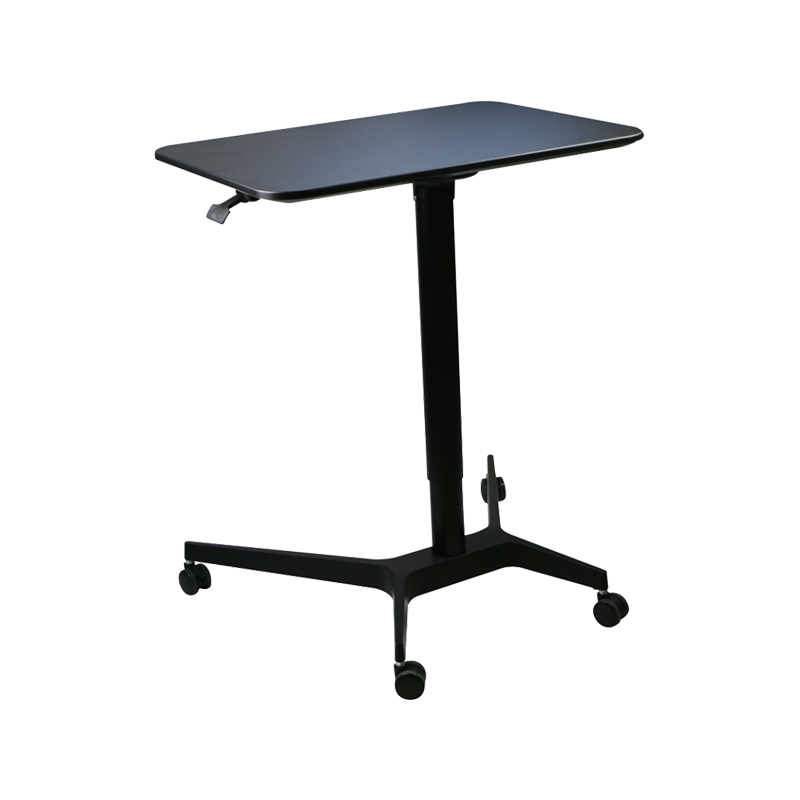 SK04 Stand-Up Flat-Legged Desk with Wide Height RangeThis flat-legged pneumatic desk offers stepless adjustment from 720 to 1200 mm, ideal for dynamic sit-stand routines. Its 20 mm MDF top and two locking casters blend stability with easy repositioning.View Product →
Frequently Asked Questions
How long does a gas spring desk last?
A quality nitrogen cylinder is rated for 20,000 to 30,000 adjustment cycles. Six changes per working day equals roughly 1,500 cycles per year, putting the cylinder service life at ten years or more. The frame and desktop last longer, and the cylinder can be swapped independently once worn.
Are gas spring desks harder to adjust than electric desks?
No. Releasing the locking mechanism lets the gas spring carry most of the desktop weight while the user guides the surface to the desired height. The entire motion takes about two seconds, with no motor travel time and no dependence on a nearby power outlet.
Can a gas spring desk support a dual-monitor setup?
Yes, when the rated load covers the real setup. A typical workstation with a 60 x 120 cm desktop, two monitors, a laptop, and a keyboard tray weighs 20-40 kg. Most pneumatic models are rated to 50-70 kg, and heavy-duty double-leg models handle that load with comfortable margin.
Do gas spring desks require any electricity or wiring?
No. Gas spring desks are entirely mechanical. That is their core advantage in office planning: no electrical points, no cable trays for the height-adjustment system, no standby power, and no electrician required when desks move between floors.

- Contact Info
-
-
 Phone+86-15950656125
 -
 Email
Email -
 AddressRoom 1007-1, South Building, Suyue Plaza, Suzhou Industrial Park, Suzhou City, Jiangsu Province, China
-
- Products
- Follow Us
- Need help? Please contact us
Copyright ©
SuZhou Skyhone Intelligent Technology Co., Ltd.
All Rights Reserved.
Privacy
Custom Ergonomic Adjustable Office Tables Manufacturers

