

 English
 русский
 Español
 عربى

Content
- 1 What a pneumatic height-adjustable desk actually is
- 2 Load capacity comes first on a pneumatic height-adjustable desk
- 3 Leg configuration controls stability more than the desktop
- 4 Height range and lock positions must match your users
- 5 Pneumatic versus electric: the honest decision framework
- 6 A verification checklist before you sign the order
- 7 Frequently asked questions about pneumatic desks
Pneumatic Height-Adjustable Desk Guide: How to Choose the Right One for Your Office
2026-10-09
Three quotes for pneumatic height-adjustable desks are sitting on your desk, and the price gap between the cheapest and the most expensive specification is 38 percent. That gap is rarely in the desktop laminate; it is in the gas spring cylinder, the leg geometry, and the locking mechanism, the components a brochure photograph cannot show you.
This guide walks through the specification points that decide whether a pneumatic desk will serve a shared office for ten years or start sagging after eighteen months. Every section leads with the conclusion you need first, then explains the engineering behind it.
What a pneumatic height-adjustable desk actually is
A pneumatic height-adjustable desk is a sit-stand workstation that uses a nitrogen gas spring counterbalance instead of a motor, moving the desktop up and down with one hand and no electricity.
The gas spring is a sealed steel cylinder filled with pressurized nitrogen and oil. Releasing the locking handle lets the gas push the piston outward, counterbalancing the desktop weight so a light pull moves the desk. The same component family opens car tailgates and positions industrial automation arms. A manufacturer that builds its own gas springs, such as SuZhou Skyhone Intelligent Technology Co., Ltd. (Skyhone), controls both the tuning and the price of the finished desk.
Core definition
A pneumatic desk converts stored gas pressure into adjustable lifting force; the better the damping and seal quality, the smoother the travel and the longer the rated load capacity holds.
No motor means no wiring, no motor noise, and no power draw during height changes. That single difference drives most of the purchasing logic that follows.
Load capacity comes first on a pneumatic height-adjustable desk
The load capacity on the specification sheet is the maximum desktop weight the gas spring can counterbalance through the full height range; exceed it, and the desk sinks slowly or refuses to rise.
A standard setup with a 27-inch monitor on a clamp arm, a keyboard, a mouse, and a laptop dock weighs roughly 14 to 22 kg. The real risk is the equipment added after installation:
- A 34-inch ultrawide monitor on a heavy-duty arm adds 9 to 13 kg.
- A second monitor plus a desktop dock pushes the total past 25 kg.
- A desktop tower with GPU workstation hardware adds another 8 to 15 kg.
Most single-cylinder pneumatic desks are rated between 50 and 80 kg. Verify the rating at the highest position, because the gas spring works hardest near the top of its travel; a desk that lifts 70 kg at 75 cm may manage only 55 kg at 115 cm.
| Desktop contents | Typical weight | Recommended pneumatic rating |
| Single monitor, keyboard, small dock | 10-15 kg | 50 kg class |
| Dual 24-27 inch monitors, laptop | 18-28 kg | 60 kg class |
| Ultrawide monitor on arm, desktop tower | 25-40 kg | 70 kg class |
| Heavy test equipment or multiple towers | 40-55 kg | 80 kg class or dual-leg pneumatic |
60 kg is the practical floorfor any office pneumatic desk that will carry a monitor arm; the arm alone adds leverage stress at full extension.
Leg configuration controls stability more than the desktop
Leg geometry, not desktop thickness, determines how much a pneumatic desk wobbles at standing height, and it sets the maximum desktop width the frame can carry without flex.
A 25 mm desktop on a wide double-leg frame feels solid at 120 cm; the same desktop on a single center column sways when a user leans on the front edge. These are the common leg architectures on the market:
| Leg architecture | Footprint style | Best use case | Stability at full height |
| Center-mounted column | Single central base | Compact workstations up to 120 cm wide | Good with symmetric loads |
| Eccentric offset column | Column behind the desktop center | Desks needing knee clearance or under-desk storage | Good if the load stays centered |
| Double-leg frame | Two ground-contact legs | Desktops 140 cm and wider, multi-monitor rigs | Highest lateral stability |
| High-leg column | Raised column on a flat foot | Standing-only stations and counter-height work | Moderate |
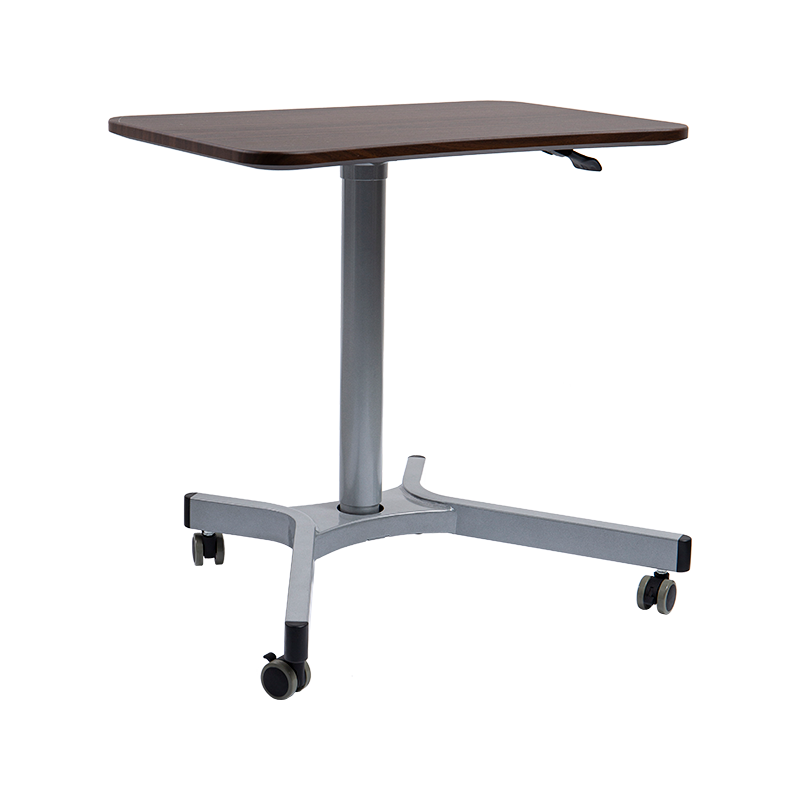
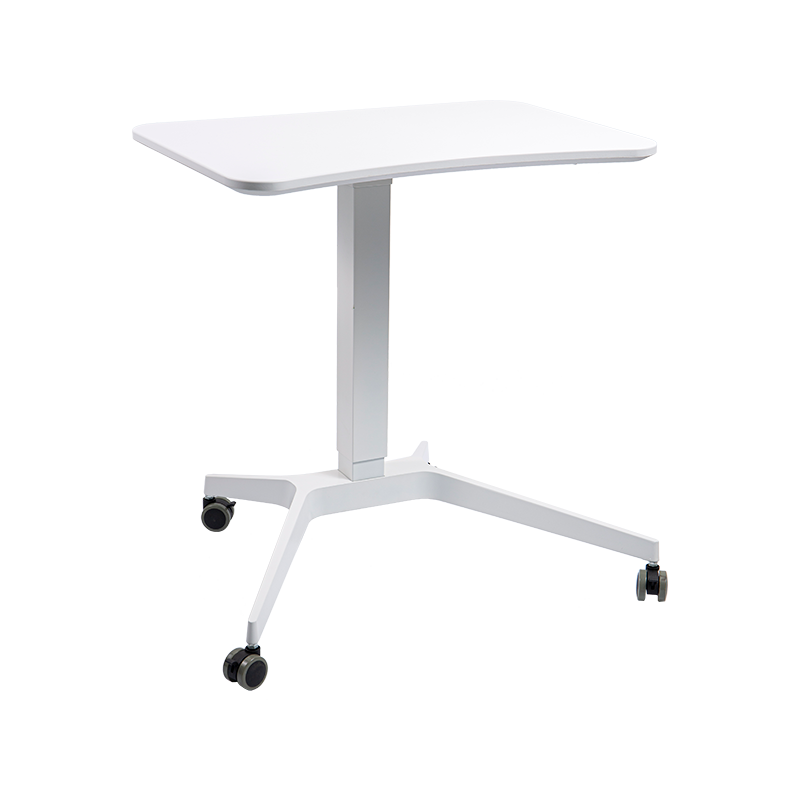
| Three-claw base | Three-point spread | Flexible open-plan layouts and mobile desks | Stable on hard floors |
| Cat-head leg bracket | Wide top bracket over a slim leg | Design-led spaces and showrooms | Moderate; watch top-heavy loads |
For a desk carrying two monitors and a heavy arm, a double-leg frame removes almost all front-to-back sway. For a compact personal desk, a center-mounted column keeps the floor area clear. These two configurations cover most office deployment scenarios.
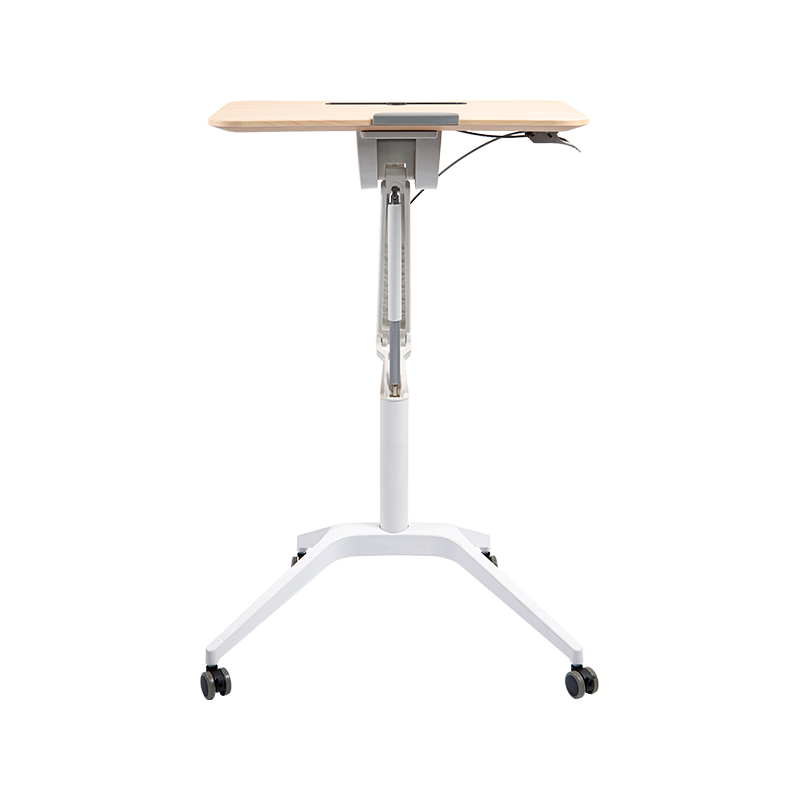
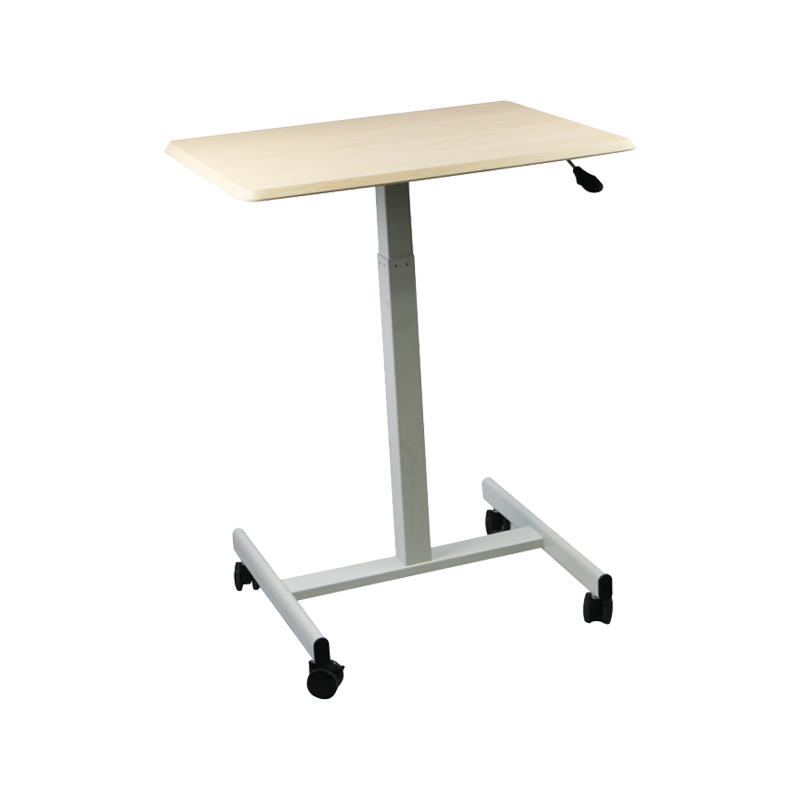 SK03 Center-Mounted Pneumatic Height-Adjustable Desk with CastersThis center-column desk pairs a compact 650x480mm top with a gas spring lift range of 745-1060mm. Its four casters, two locking, make repositioning easy while the iron frame and powder coating add durability—worth checking if you need a space-saving adjustable desk.View Product →
A 60-second stability test: at maximum height, push the front edge with about 5 kg of horizontal force. If the far corner deflects more than 10 mm, ask the supplier for a wider leg stance or a heavier frame before ordering a batch.
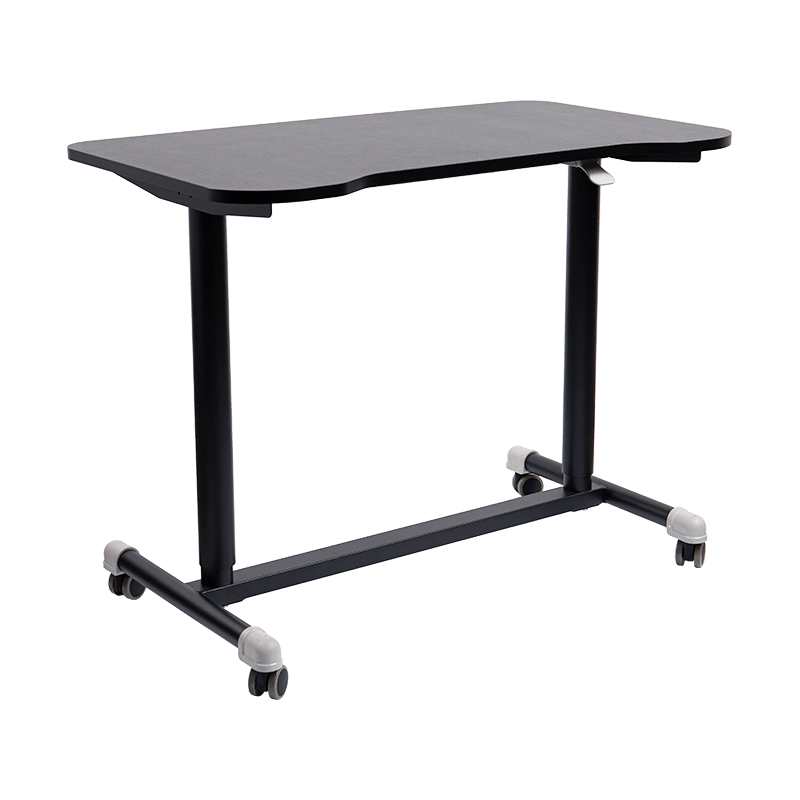 SK-14 Double-Leg Pneumatic Height-Adjustable Desk with Mobile BaseA dual-leg design offering stepless adjustment from 760-1100mm, this 980x560mm desk suits seated and standing work. Its four swivel casters, two with locks, allow easy relocation, and the gas spring mechanism needs no power, making it practical for offices, labs, or home study areas.View Product →
Height range and lock positions must match your users
Match the adjustment band to your tallest and shortest users first; a desk that cannot go low enough for a 158 cm employee is an ergonomic failure no matter how well it is built.
Seated work needs a desktop surface around 65 to 75 cm depending on stature, and standing work needs roughly 90 to 115 cm. A travel range of 60 to 125 cm covers both extremes with margin for footwear and chairs.
Working band: Skyhone pneumatic desks cover 60 to 125 cm of height adjustment, spanning the seated elbow height of a 155 cm user to the standing elbow height of a 195 cm user.
Locking positions matter almost as much as range. A continuous lock holds any height between the limits; a stepped lock stops only at preset notches. For shared desks, a continuous lock damped to hold position under 60 kg of load prevents the slow sink that users read as a broken desk.
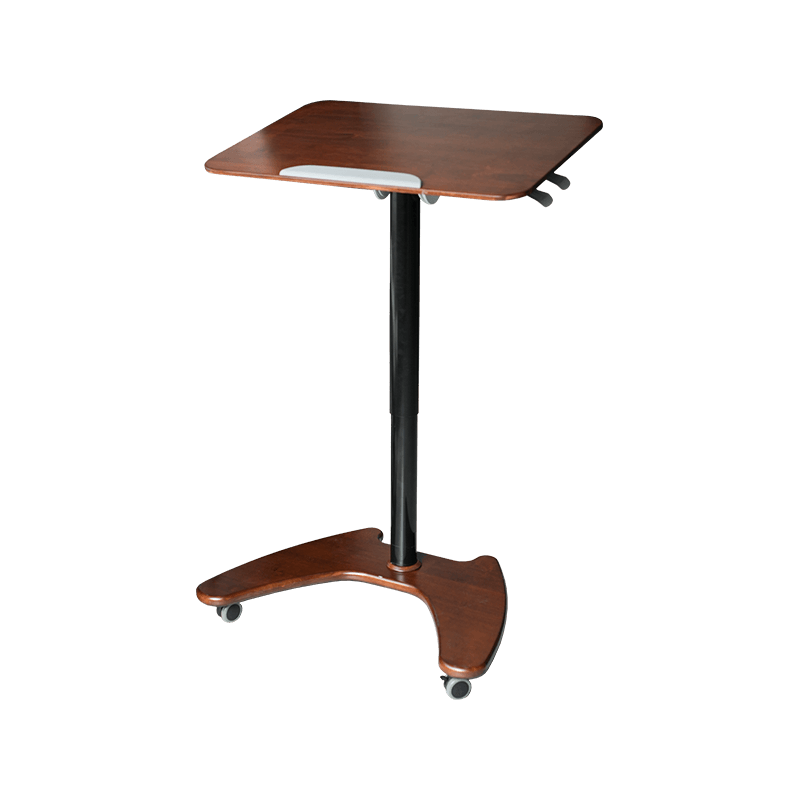
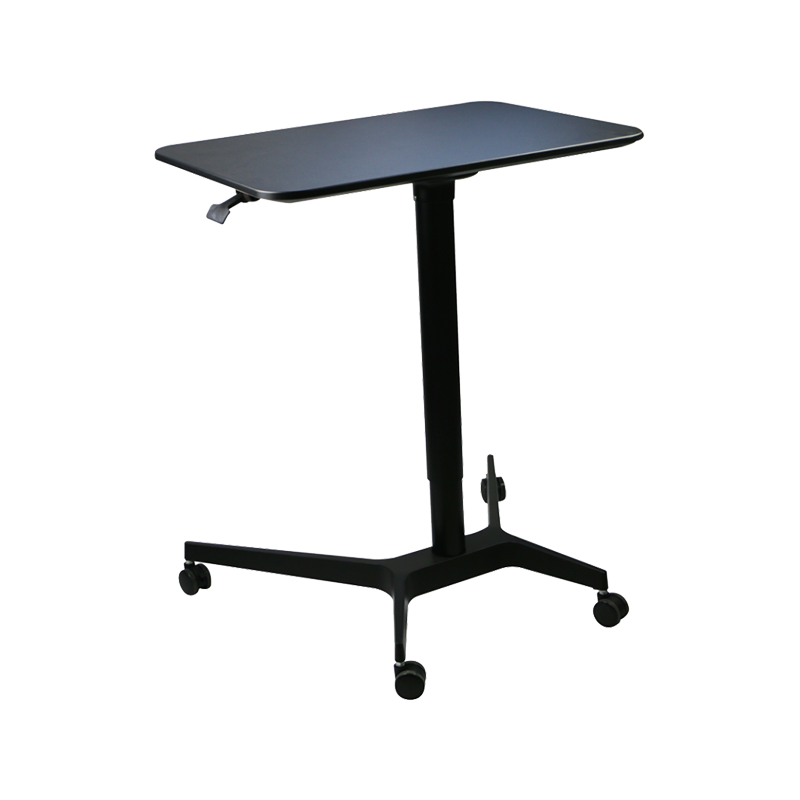 SK04 Stand-Up Flat-Legged Pneumatic Height-Adjustable DeskWith a 720-1200mm adjustment range and a 715x495mm top, this desk supports both sitting and standing postures. The flat-legged frame, 20mm MDF top, and casters with two locks combine stability and mobility, while the gas spring lift offers quick, tool-free height changes.View Product →
Also check transition time. A pneumatic desk changes height in about 3 to 5 seconds for a full 50 cm move with one hand, which is faster than most electric legs.
Pneumatic versus electric: the honest decision framework
Choose a pneumatic height-adjustable desk when you need instant, cord-free height changes at a lower purchase price, and choose an electric desk only when you need memory presets, hands-free raising, or a payload above 80 kg.
The chart below scores both technologies across five criteria that matter to an office buyer. Higher is better on every axis.
Figure 1: Pneumatic desks lead on cost, energy, speed, and maintenance; electric desks lead on payload headroom.
50-80 kgTypical pneumatic load rating
80 kgThreshold to switch to electric
0 WPower draw during height change
10,000+Typical gas spring cycle rating
Choose a pneumatic desk when
- Budget is the deciding factor for a multi-seat rollout.
- The office has no power drop at the desk position.
- Users want a full height change in under 5 seconds.
- The desktop payload stays below 80 kg.
- You want the smallest spare-parts list possible.
Choose an electric desk when
- You need 4 to 8 programmable memory presets per desk.
- Users have mobility limitations that make manual force difficult.
- The payload exceeds 80 kg at standing height.
- You are linking sit-stand schedules to digital wellness tools.
For most open-plan offices where employees alternate between sitting and standing, pneumatic desks deliver the same health outcome as electric at a lower total cost of ownership, because the only wear component is the sealed gas spring.
A verification checklist before you sign the order
Run these six checks against every pneumatic desk quote; each takes less than two minutes with a competent supplier and eliminates most field failures.
- Ask for the rated load at the maximum height, not the nominal brochure value.
- Confirm the gas spring is replaceable as a spare part and check the cylinder wall thickness; 2.0 mm wall steel is a common quality threshold.
- Test the damping at the lowest position; a desk that drops fast near the floor is a finger pinch risk.
- Verify the lock mechanism holds after rapid height changes; continuous locks fail more often than stepped locks.
- Check the desktop grade for moisture resistance if the desk will sit near windows or in break areas.
- Request the ergonomic test report and the ISO material compliance documents before delivery.
A pneumatic desk is a mechanical product, and mechanical products fail on two things: under-specified gas springs and weak leg frames. Verify those two components and the desk will outlast the lease on the office.
Frequently asked questions about pneumatic desks
How much weight can a pneumatic height-adjustable desk support?
Typical single-cylinder pneumatic desks are rated from 50 to 80 kg. Dual-leg and heavy-duty configurations go higher, but above 80 kg an electric actuator is usually the safer specification. Always check the rating at the highest desk position, where the gas spring works hardest.
How long do gas springs last in a pneumatic desk?
Industrial-grade gas springs are commonly rated for 10,000 or more extension cycles. Four full sit-stand cycles per day adds up to roughly 1,000 cycles per year, so a properly tuned spring should last beyond a decade of normal office use. The seal and the internal damping oil degrade first, which is why a replaceable gas spring matters.
Yes, when the height range and load rating fit both users. A travel range of 60 to 125 cm covers users from about 155 to 195 cm tall. The one-hand adjustment speed makes shared desks practical because a full height change takes only a few seconds between shifts.
Is a pneumatic desk better than an electric height-adjustable desk?
Neither is better in every office. Pneumatic desks win on price, simplicity, zero power draw, and speed of manual adjustment; electric desks win on memory presets, hands-free operation, and payloads above 80 kg. Match the technology to the workspace and the user group instead of picking one for the whole building.



- Contact Info
-
-
 Phone+86-15950656125
-
 Email
-
 AddressRoom 1007-1, South Building, Suyue Plaza, Suzhou Industrial Park, Suzhou City, Jiangsu Province, China
-
- Products
- Follow Us
- Need help? Please contact us
Copyright ©
SuZhou Skyhone Intelligent Technology Co., Ltd.
All Rights Reserved.
Privacy
Custom Ergonomic Adjustable Office Tables Manufacturers

