

 English
  русский
  Español
  عربى
عربى 
Content
- 1 Why Gas Springs Lose Pressure Over Time: The Leakage Mechanism
- 2 Root Causes: Why Gas Springs Lose Pressure Over Time Faster Than Rated
- 3 How Fast Do Gas Springs Lose Pressure Over Time? The Real Numbers
- 4 What to Check Before Buying a Gas Spring That Holds Its Charge
- 5 Gas Spring Pressure Loss in Pneumatic Desks: What You Will Notice
- 6 How to Slow Pressure Loss: Installation and Maintenance Rules
- 7 Gas Spring Pressure Loss: Common Questions
Why Gas Springs Lose Pressure Over Time: Causes, Service Life, and Fixes
2026-09-28
A pneumatic standing desk sinks a few millimeters overnight; a car tailgate drifts closed in winter; a machine guard sags when it should stay open. All point to the same silent process. Gas springs lose pressure over time because the nitrogen charge inside the cylinder escapes past the rod seal and through the elastomer, even when the spring looks clean and undamaged from the outside.
15-20% internal charge lost is enough to turn a firm gas spring into one that visibly sags under a 25 kg desk top.
Why Gas Springs Lose Pressure Over Time: The Leakage Mechanism
The answer is straightforward: gas escapes through the seal system, not through cracks in the tube. A gas spring is a sealed steel cylinder containing compressed nitrogen at roughly 20-150 bar, a small oil charge, a chrome-plated piston rod, and an elastomer seal pack that must seal against a rod moving at speed. Every stroke drags a microscopic film of oil past the rod seal; nitrogen molecules follow the same path, and a portion also permeates slowly through the seal elastomer itself.
Key definition
Force decay is the gradual reduction of a gas spring's extension force over time, expressed as the percentage of the original rated force still delivered after a given number of cycles or years. A spring rated at 1,000 N that delivers only 850 N after four years has experienced 15% force decay.
Because the extension force equals internal pressure multiplied by the effective piston area, the effect is proportional: a 10% drop in charge produces roughly a 10% drop in extension force before seal friction is subtracted. That is why pressure loss is gradual instead of sudden, and why early force decay is easy to miss on a desk that is rarely fully unloaded.
Root Causes: Why Gas Springs Lose Pressure Over Time Faster Than Rated
Every gas spring loses some gas; how fast depends on seal wear, rod condition, contamination, and temperature history. These four factors push a spring off its rated decay curve.
- Seal and wiper wear. Each extension-retraction cycle wipes a fine oil film outward; after tens of thousands of cycles the seal lip widens and the leakage path grows.
- Rod surface damage. Nicks, scratches, or corrosion on the chrome rod act as bypass channels that let gas escape past the seal lip.
- Dust and contamination. Abrasive particles embed in the wiper and grind the rod, accelerating seal wear by a multiple of the normal rate.
- Temperature cycling. Internal pressure swings with temperature; repeated thermal cycling ages the elastomer and can pull moist air past a weakening seal.
- Side loading and misalignment. A rod that is not aligned with the mounting axis wears the seal unevenly on one side.
- End-stop impact. Repeatedly bouncing at full stroke damages the internal cushion and the seal carrier.
Fast check
If a desk collapses overnight within 24 months and the rod shows no visible damage, the seal pack is the prime suspect. The gas specification does not change over time; the sealing boundary does.
| Failure mode | Where it starts | Typical result |
| Seal lip wear | Rod seal contact face | Steady gas loss after 30,000-50,000 cycles |
| Rod scoring | Chrome rod surface | Rapid force drop within weeks |
| Wiper failure | Outer wiper lip | Dirt enters and erodes the seal |
| Elastomer aging | O-ring and seal material | Permeation rises and force fades slowly |
| End-stop damage | Internal cushion ring | Inconsistent force and early oil loss |
How Fast Do Gas Springs Lose Pressure Over Time? The Real Numbers
A well-built gas spring with a premium seal pack keeps 80-90% of its rated force for five to seven years in indoor furniture duty, while a standard seal unit can fall to half of its original force within the same window. Cycle ratings tell the same story: furniture gas springs are commonly rated for 50,000-200,000 cycles, and replacement is normal once visible sag appears.
5-7yearsuseful force life in indoor duty
50-200kcyclestypical rated service life
~15%force losslevel at which sag becomes visible
A premium-seal gas spring can still deliver 87% of its rated force at year eight, while a standard seal spring of the same size is down to 56%. That difference decides whether a desk passes a one-finger release test at head height.
What to Check Before Buying a Gas Spring That Holds Its Charge
Buying on extension-force rating alone is how most buyers end up with early pressure loss, because the seal system and rod finish determine the leak rate and neither appears on a force sticker. A gas spring that meets its force spec on day one is not the same as one that still meets it after 100,000 cycles.
Rod surfaceChrome-plated rod finished to 0.2 micron Ra or better, with plating thickness of at least 18-20 microns.
Seal packMulti-lip rod seal plus an external wiper in polyurethane or NBR, matched to the intended stroke rate.
Gas chargeDry nitrogen at 99.9% purity; moisture in the charge is a direct cause of internal corrosion and rapid seal death.
Cycle validationA stated cycle rating with a published decay curve, not just a first-day force number.
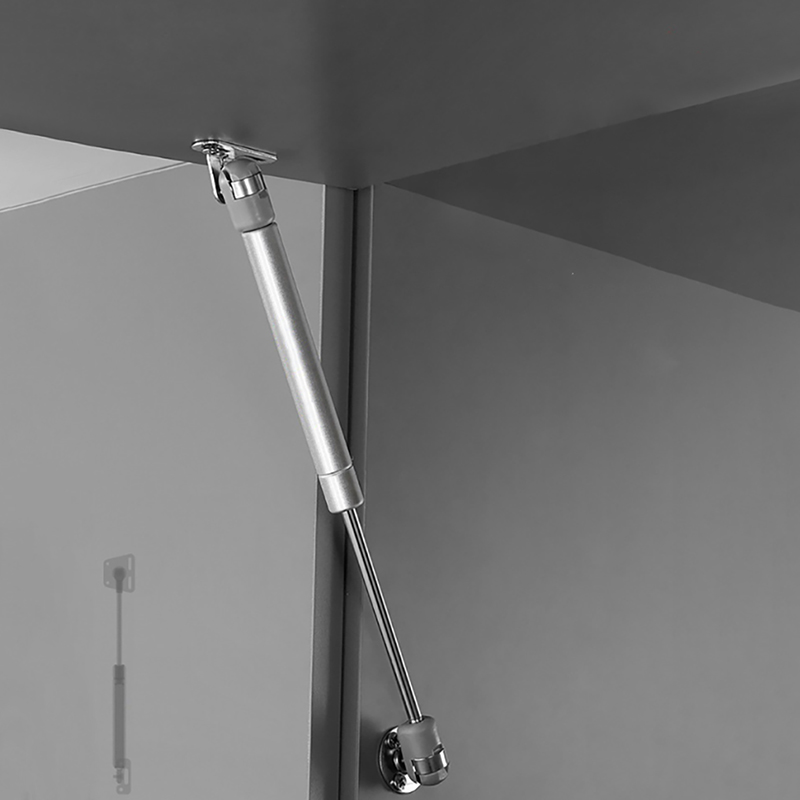
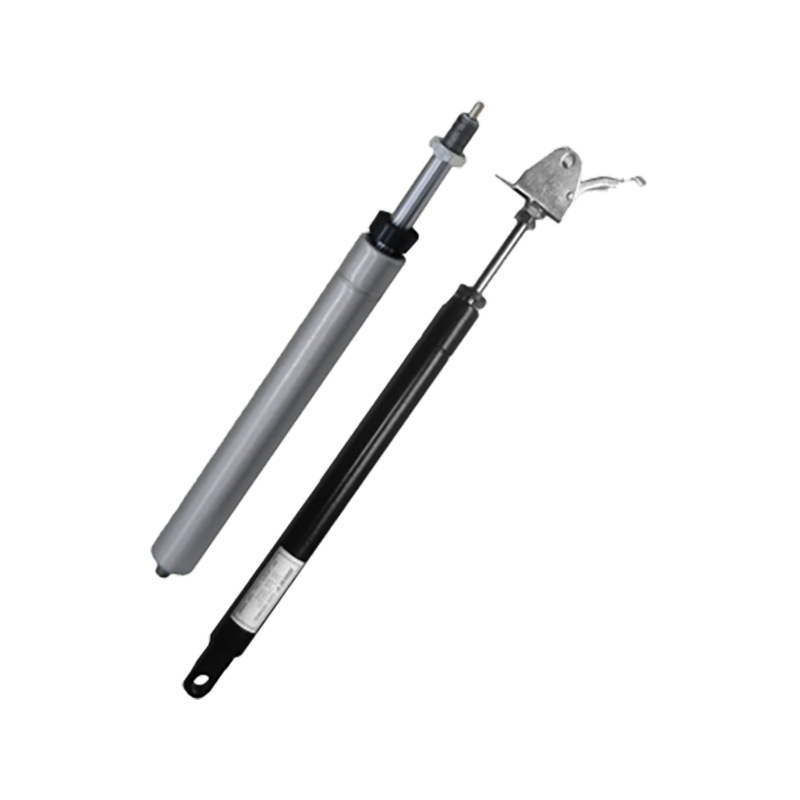 Adjustable Gas Springs with Durable Seals and Rod FinishExplore adjustable gas springs where seal quality and rod finishing determine long-term lift force, not just initial ratings. Designed for sustained performance and minimal pressure loss.View Product →
The single most useful document a supplier can share is a force-decay curve from a 100,000-cycle test. If no curve exists, request a sample and re-measure the spring after 10,000 manual cycles at the intended mounting angle before you commit to volume.
Gas Spring Pressure Loss in Pneumatic Desks: What You Will Notice
In a pneumatic height-adjustable desk, pressure loss appears as slow sink-back rather than sudden collapse. The desk creeps downward from its set height over minutes or hours, the lift force feels weak at the highest settings, and the tension adjustment stops reaching its full range.
Early signs
- Desk drops 5-10 mm within the first hour after adjustment
- Higher working positions feel noticeably lighter
- Lift behavior changes noticeably between cold and warm rooms
Late signs
- Desk settles fully to its lowest stop overnight
- Release lever produces a hard metal-on-metal stop
- Two-spring desks develop a visible tilt across the tabletop
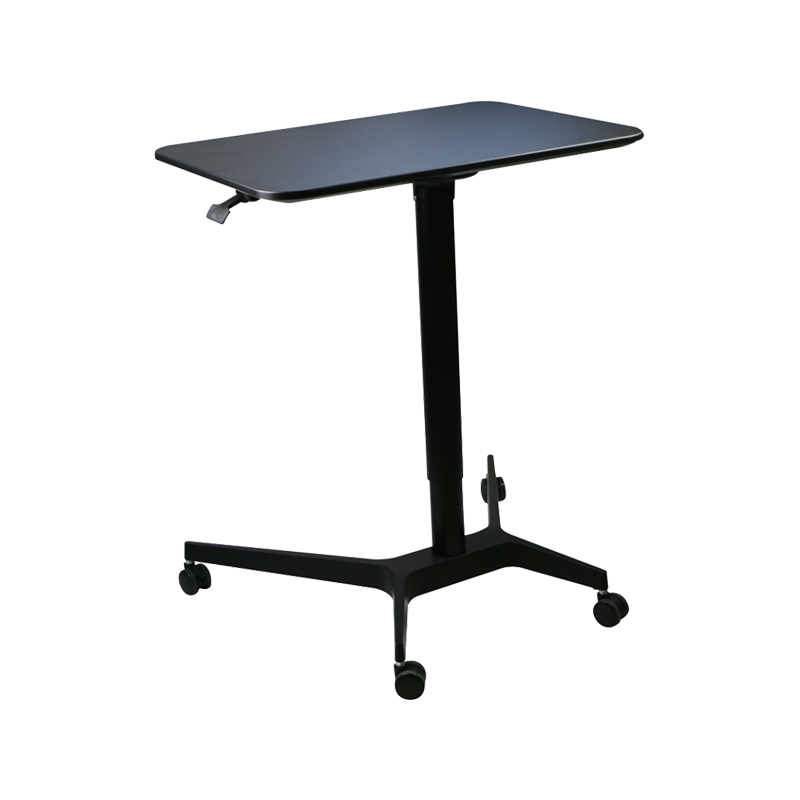
SuZhou Skyhone Pneumatic Desk Collection with Matched Gas SpringsView SuZhou Skyhone's pneumatic height-adjustable desks, where each frame pairs with a gas spring sized for its tabletop weight and adjustment frequency, reducing sink-back over time.View Product →
The pneumatic desk collection built by SuZhou Skyhone Intelligent Technology Co., Ltd. pairs each frame model with a gas spring sized for its tabletop weight range and expected adjustment frequency, because a cylinder that is undersized for the load decays faster in daily use.
How to Slow Pressure Loss: Installation and Maintenance Rules
A clean, aligned gas spring holds its charge two to three times longer than one exposed to abrasive dust and side loads. The same hardware fails or survives based on five habits.
- Wipe the rod clean before installation and never clamp the rod surface with pliers or a vice.
- Align the mounting brackets so the rod moves on its intended axis; side load is the most common silent killer.
- Protect the rod from weld spatter, paint overspray, and grinding sparks during assembly on site.
- Stay inside the rated stroke and temperature envelope, and avoid bouncing the desk off its end stops.
- Store spare springs with the rod pointing down so the internal oil reservoir keeps the rod seal wetted.
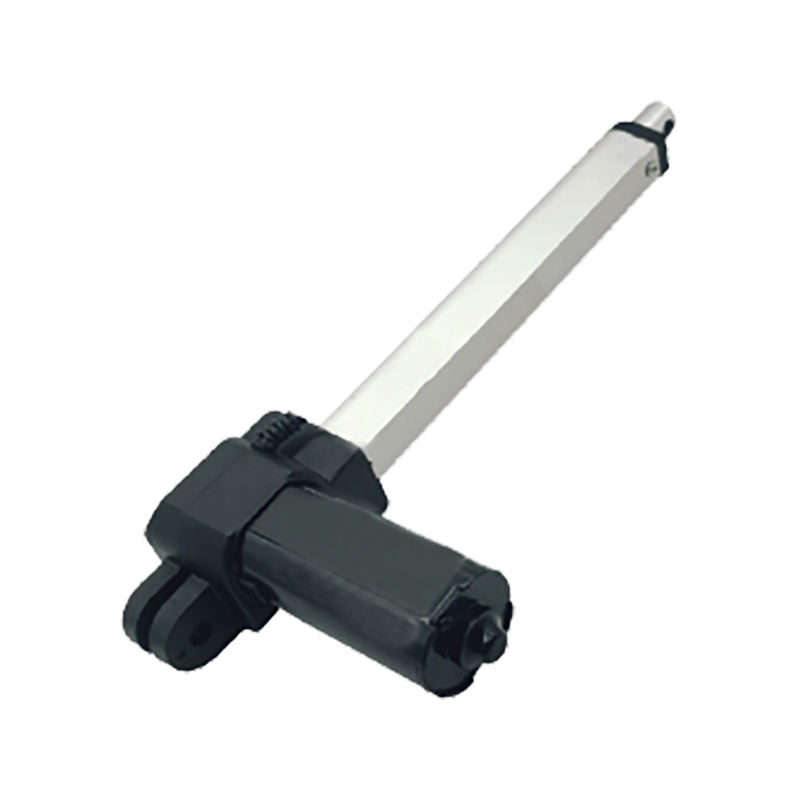
When a gas spring reaches the 150,000-200,000 cycle range, replacement costs less than continuing to operate with a soft, unstable force. For applications that run millions of cycles, electric linear actuators are the standard alternative because they carry no compressed-gas charge to lose.
Gas Spring Pressure Loss: Common Questions
How long should a gas spring hold its pressure before replacement?
In indoor furniture duty, a quality gas spring keeps 80-90% of its rated force for five to seven years. Replace the spring when it can no longer hold the required position without help, rather than on a fixed calendar date.
Can a gas spring be recharged with nitrogen after it loses pressure?
Recharging is possible only for cylinders designed with a service valve, which most furniture and automotive gas springs do not have. Sealed gas springs must be replaced, because they are filled and sealed under controlled pressure at the factory.
Does cold weather make a gas spring lose pressure faster?
Cold alone does not create permanent charge loss, but lower internal pressure makes a weak spring feel noticeably weaker. Repeated severe temperature swings age the seal elastomer faster, and that aging does cause long-term pressure loss.
Why did my pneumatic desk lose its lifting force after one year?
One-year force loss usually points to a contaminated installation or a low-grade seal pack, not to normal decay. Dust on the rod, side loading from misaligned brackets, or a rod nicked during assembly can multiply the leak rate several times over.
Bottom line: force decay is inevitable, but its speed is a design choice. Seal quality, rod finish, and mounting discipline determine whether a gas spring holds its charge for two years or eight.


- Contact Info
-
-
 Phone+86-15950656125
 -
 Email
Email -
 AddressRoom 1007-1, South Building, Suyue Plaza, Suzhou Industrial Park, Suzhou City, Jiangsu Province, China
-
- Products
- Follow Us
- Need help? Please contact us
Copyright ©
SuZhou Skyhone Intelligent Technology Co., Ltd.
All Rights Reserved.
Privacy
Custom Ergonomic Adjustable Office Tables Manufacturers

