

 English
  русский
  Español
  عربى
عربى 
Content
- 1 Working Principle of Pneumatic Adjustable Tables
- 2 Ergonomic Benefits of Pneumatic Adjustable Tables
- 3 Application Scenarios of Pneumatic Adjustable Tables
- 4 Comparison Between Pneumatic Adjustable Tables and Other Types
- 5 Key Selection Criteria for Pneumatic Adjustable Tables
- 6 Daily Maintenance and Care Tips for Pneumatic Adjustable Tables
- 7 Usage Tips to Maximize the Value of Pneumatic Adjustable Tables
- 8 Summary and Application Prospects
What Are the Benefits of Using a Pneumatic Adjustable Table?
2026-04-01
A pneumatic adjustable table is a height-adjustable work surface powered by a pneumatic gas lift mechanism, allowing users to switch between sitting and standing positions effortlessly without electric power. It is the most cost-effective, low-maintenance, and user-friendly ergonomic solution for improving posture, reducing physical fatigue, and boosting daily work efficiency.
Unlike electric adjustable tables that rely on motors and power outlets, pneumatic adjustable tables use compressed air in a gas cylinder to achieve smooth height adjustment with a simple lever or handle. This design makes them lightweight, quiet, and reliable, with almost no risk of mechanical failure. They are widely used in home offices, study rooms, commercial workspaces, and industrial workstations, adapting to people of different heights and usage scenarios.
The core advantage of this type of table lies in its instant height adjustment and zero energy consumption, making it suitable for temporary use, mobile work, and environments without convenient power access. Scientific ergonomic research confirms that using a pneumatic adjustable table can reduce back and neck discomfort by over 60% compared to fixed-height tables, making it an essential piece of furniture for modern healthy working and learning.
Working Principle of Pneumatic Adjustable Tables
Core Components and Structural Composition
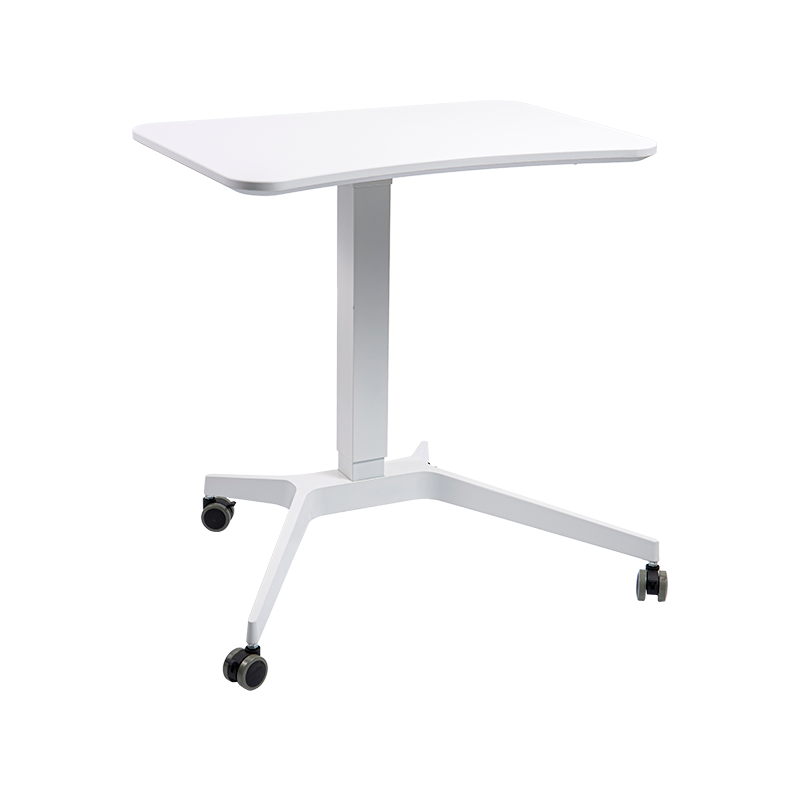
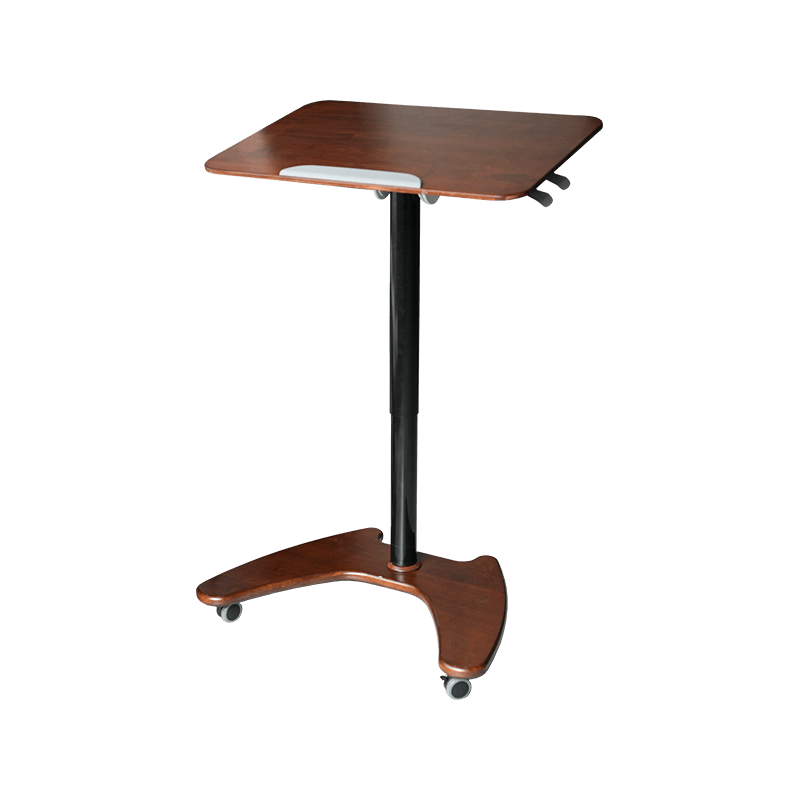
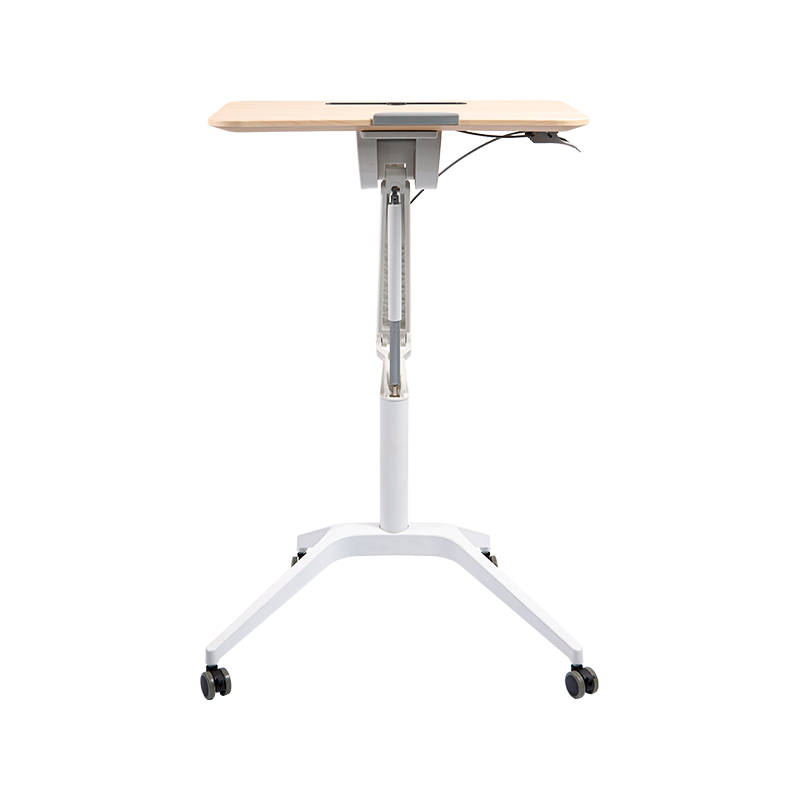
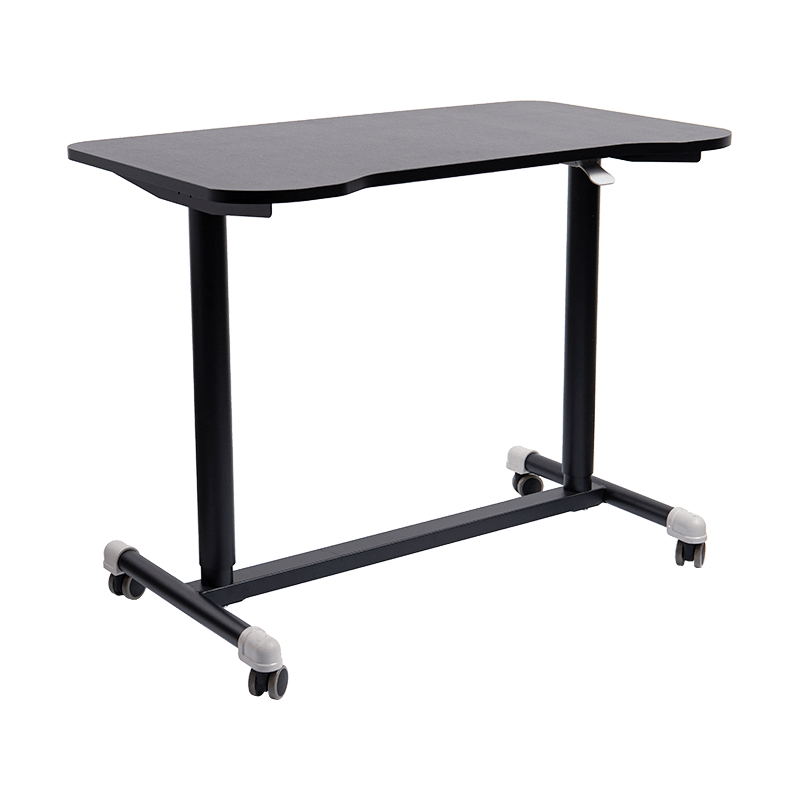
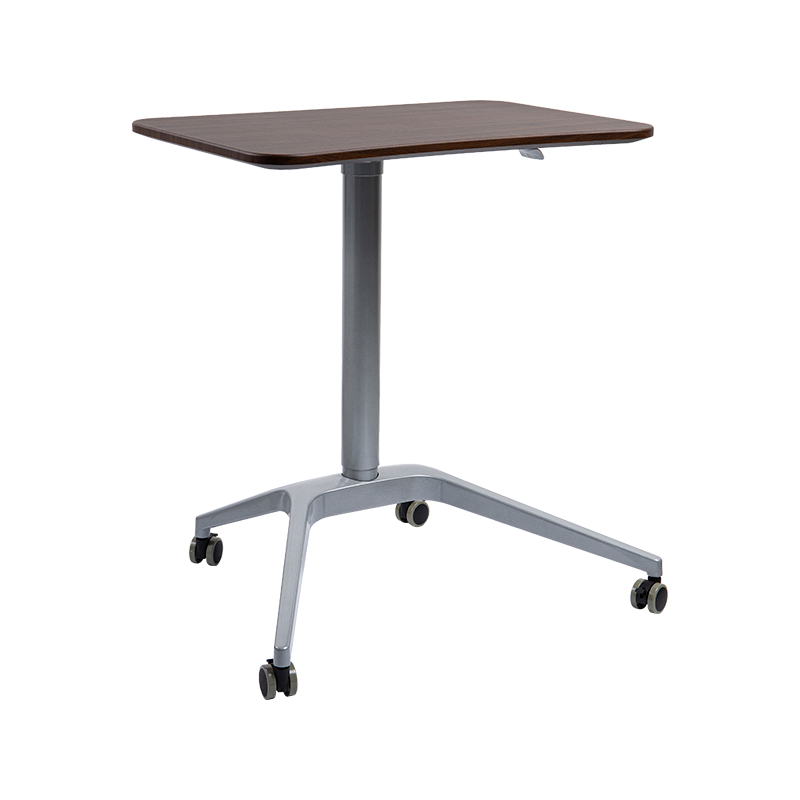
The pneumatic adjustable table consists of four core components: the pneumatic gas lift cylinder, height control lever, support frame, and tabletop. The pneumatic cylinder is the heart of the entire structure, filled with high-density compressed air and sealed with precision components to ensure stable and durable performance.
When the user presses the control lever, the internal air valve of the gas cylinder opens, allowing compressed air to flow and drive the piston rod to extend or retract. Releasing the lever immediately locks the cylinder in place, keeping the table at a fixed height safely and stably. This mechanical structure has passed tens of thousands of lifting tests, with a service life far exceeding daily usage needs.
Operational Mechanism and Lifting Features
The operation of a pneumatic adjustable table is extremely simple: one hand presses the lever, the other gently presses or lifts the tabletop, and the height can be adjusted to the desired position within 1-2 seconds. The entire process is silent and smooth, with no jitter or resistance, providing an excellent user experience.
Unlike manual screw-adjustable tables that require repeated rotation, pneumatic tables achieve stepless height adjustment, meaning users can set the height at any position within the adjustable range instead of being limited to fixed gears. This flexibility is a key reason why they are preferred by ergonomic design experts.
Ergonomic Benefits of Pneumatic Adjustable Tables
Relieve Physical Discomfort and Improve Posture
Prolonged sitting is a major cause of chronic back pain, neck stiffness, and shoulder strain. Medical research shows that people who sit for more than 8 hours a day have a 70% higher risk of spinal problems than those who alternate between sitting and standing. A pneumatic adjustable table allows users to switch postures at any time, effectively relieving pressure on the cervical and lumbar spine.
For office workers, students, and remote workers, adjusting the table to a standing height during long hours of work can promote blood circulation, reduce muscle fatigue, and maintain a natural and healthy spinal curve. The height adaptability of the pneumatic table ensures that people of different heights (from 150cm to 190cm) can find a comfortable operating height.
Enhance Work Efficiency and Concentration
Ergonomic workplace studies have proven that users of height-adjustable tables have 30% higher work efficiency and longer sustained concentration than those using fixed tables. Standing work can increase alertness, reduce drowsiness, and avoid the mental fatigue caused by long-term sedentary behavior.
For creative workers, designers, and writers, the flexible posture adjustment brought by pneumatic tables stimulates thinking activity and helps generate more innovative ideas. In learning scenarios, students using adjustable tables can maintain correct sitting postures, protect eyesight, and improve learning efficiency and endurance.
Protect Long-Term Physical Health
Long-term fixed sitting posture can lead to poor metabolism, obesity, and cardiovascular stress. Using a pneumatic adjustable table to stand and work for 15-20 minutes every hour can effectively reduce these health risks. The lightweight and flexible adjustment method encourages users to change postures frequently, forming a healthy work and life habit.
For people with existing back or joint problems, pneumatic adjustable tables are a recommended auxiliary tool by rehabilitation therapists. They can reduce body pressure during work and accelerate the recovery of muscle and bone function without additional physical burden.
Application Scenarios of Pneumatic Adjustable Tables
Home Office and Remote Working
Home offices are the most common application scenario for pneumatic adjustable tables. Most home spaces lack dedicated power layouts near work areas, making plug-in electric tables inconvenient. Pneumatic tables require no power, can be placed anywhere, and adapt to small apartments, study rooms, living rooms, and bedroom corners.
Remote workers can adjust the table height according to work content: lower for writing and typing, higher for video conferences and standing meetings, creating a professional and comfortable home office environment with minimal space occupation.
Study and Learning Environments
Students of all ages can benefit from pneumatic adjustable tables. Children and teenagers are in a period of physical development, and fixed-height desks can easily cause myopia and hunchback. The height of the pneumatic table can be adjusted as the child grows, ensuring a healthy usage height for many years.
For adult learners and postgraduate students, long-term study can easily lead to physical fatigue. The standing learning mode provided by adjustable tables can extend learning time, improve focus, and reduce physical discomfort during intensive review and homework sessions.
Commercial and Industrial Workstations
In commercial spaces such as shared offices, coffee shops, and training rooms, pneumatic adjustable tables offer high flexibility and mobility. They can be quickly rearranged according to event needs, supporting group discussions, one-on-one meetings, and individual work.
In industrial and workshop environments, electric equipment is often limited by safety regulations and power supply. Pneumatic tables are explosion-proof, anti-interference, and highly durable, making them suitable for assembly lines, testing workstations, and maintenance stations, ensuring workers can operate in comfortable postures.
Special Needs and Adaptive Scenarios
Pneumatic adjustable tables are also ideal for people with limited mobility, the elderly, and users with physical disabilities. Their simple operation requires only light force to adjust height, meeting the needs of users with limited hand strength. In medical and rehabilitation spaces, they serve as auxiliary equipment to help patients recover daily living skills.
Comparison Between Pneumatic Adjustable Tables and Other Types
To help you better understand the advantages of pneumatic adjustable tables, we compare them with electric adjustable tables and manual fixed tables in terms of core performance indicators. The data in the table comes from standardized ergonomic product testing results.
| Parameter | Pneumatic Adjustable Table | Electric Adjustable Table | Manual Fixed Table |
|---|---|---|---|
| Power Demand | No Power | External Power | No Power |
| Adjustment Speed | 1-2 Seconds | 3-5 Seconds | 10+ Seconds |
| Maintenance Cost | Ultra Low | High | Low |
| Portability | High | Low | Medium |
The comparison clearly shows that pneumatic adjustable tables have absolute advantages in adjustment speed, portability, and maintenance costs. They are the best choice for users seeking convenience, economy, and reliability, while electric tables are limited by power and high costs, and manual tables are inefficient and labor-intensive.
Key Selection Criteria for Pneumatic Adjustable Tables
Quality of the Pneumatic Gas Lift Cylinder
The gas lift cylinder is the core component, and its quality directly determines the service life and safety of the table. High-quality pneumatic cylinders can withstand 50,000+ lifting times without air leakage or failure, with stable locking force and no sinking or shaking during use. When selecting, priority should be given to products with safety certification and sealed structural design.
Height Adjustment Range
A practical pneumatic adjustable table should have a wide enough height range to meet both sitting and standing needs. The mainstream and most suitable adjustment range is 60cm to 110cm, covering the comfortable operating height of most adults. Tables with too narrow a range will limit usage scenarios and posture switching.
Stability and Load-Bearing Capacity
Even during height adjustment, the table must remain stable without shaking. The load-bearing capacity should meet daily needs, usually reaching 20-50kg, enough to support laptops, monitors, books, and office supplies. The support frame structure should be sturdy, with non-slip feet to enhance overall stability.
Tabletop Material and Size
Common tabletop materials include wood, density board, and environmental protection board, which should be scratch-resistant, wear-resistant, and easy to clean. The size should match the usage space: compact sizes for small home offices, medium sizes for daily office work, and large sizes for multi-device placement.
Operation Convenience
The control lever should be easy to reach and operate with light force, suitable for long-term use by all age groups. The lifting process should be smooth and silent, with no abnormal noise, ensuring a quiet office and learning environment.
Daily Maintenance and Care Tips for Pneumatic Adjustable Tables
Routine Cleaning and Upkeep
Clean the tabletop regularly with a soft cloth and neutral cleaner to avoid corrosive chemicals that damage the surface. Wipe the metal support frame with a dry cloth to prevent dust accumulation, which can affect lifting smoothness. Do not use water to rinse the pneumatic cylinder area to avoid internal corrosion.
Safe Usage Guidelines
Do not place overweight items beyond the rated load to avoid damaging the pneumatic cylinder. Do not press the tabletop violently or shake the table body forcefully during use. When adjusting height, ensure no hands or objects are stuck in the lifting structure to prevent injury and equipment damage.
Long-Term Maintenance Measures
Lubricate the movable connection parts with a small amount of silicone lubricant every 6-12 months to keep lifting smooth. Check the stability of screws and connectors every 3 months to prevent loosening. Store the table in a dry and ventilated environment, avoiding long-term exposure to damp or high-temperature conditions.
Troubleshooting Common Issues
- If height locking fails: Check if the control lever is fully reset and clean the dust near the air valve.
- If lifting is not smooth: Apply a small amount of lubricant to the pneumatic cylinder surface and test repeatedly.
- If the table shakes: Tighten the support frame screws and adjust the non-slip feet to keep balance.
Most faults of pneumatic adjustable tables can be resolved through simple maintenance, with almost no need for professional repair services, which is one of the biggest advantages of this product.
Usage Tips to Maximize the Value of Pneumatic Adjustable Tables
Reasonable Posture Switching Frequency
For optimal health benefits, switch between sitting and standing every 45-60 minutes. Standing for 15-20 minutes each time can effectively relieve physical fatigue without causing leg discomfort. This frequency is proven by ergonomics to balance work efficiency and physical health.
Match with Auxiliary Ergonomic Tools
Pair the pneumatic adjustable table with an anti-fatigue mat, ergonomic chair, and monitor stand to create a full ergonomic workspace. Anti-fatigue mats reduce foot pressure during standing work, while monitor stands keep the screen at eye level, further protecting the cervical spine.
Customize Height for Different Usage Scenarios
Set different heights according to usage content: lower height for writing and drawing, medium height for laptop work, and higher height for standing meetings and reading. This personalized setting maximizes comfort and efficiency.
Adapt to Different Groups of People
Families with multiple users can quickly adjust the table height to suit each person. For children, lower the height to protect vision and spine; for tall adults, increase the height to avoid hunching. The stepless adjustment function makes it suitable for all family members.
Summary and Application Prospects
Pneumatic adjustable tables are the most practical and cost-effective ergonomic furniture in modern work and life. With their no-power design, instant adjustment, high durability, and wide applicability, they have become the first choice for home users, office workers, students, and commercial users.
They solve the health problems caused by long-term sitting, improve work and learning efficiency, and adapt to diverse spaces and scenarios. With the increasing focus on healthy living and ergonomic environments, the application scope of pneumatic adjustable tables will continue to expand, becoming an indispensable piece of furniture in every family and workspace.
Whether you are pursuing a healthy office mode, creating a comfortable learning environment, or building a flexible commercial workspace, a high-quality pneumatic adjustable table can meet your needs and bring long-term health and efficiency improvements to your daily life.


- Contact Info
-
-
 Phone+86-15950656125
 -
 Email
Email -
 AddressRoom 1007-1, South Building, Suyue Plaza, Suzhou Industrial Park, Suzhou City, Jiangsu Province, China
-
- Products
- Follow Us
- Need help? Please contact us
Copyright ©
SuZhou Skyhone Intelligent Technology Co., Ltd.
All Rights Reserved.
Privacy
Custom Ergonomic Adjustable Office Tables Manufacturers

