

 English
  русский
  Español
  عربى
عربى 
Content
- 1 A custom adjustable gas spring is the definitive solution for precise, variable load management in dynamic mechanical applications
- 2 Fundamental Mechanics of Adjustable Gas Springs
- 3 Key Differentiators: Custom vs. Standard Gas Springs
- 4 Primary Industrial and Commercial Applications
- 5 Critical Engineering Parameters for Customization
- 6 Best Practices for Installation and Calibration
- 7 Environmental Considerations and Material Selection
- 8 Maintenance Protocols to Extend Operational Life
- 9 Safety Mechanisms and Failure Mode Management
How can a custom adjustable gas spring solve the gap?
2026-04-22
A custom adjustable gas spring is the definitive solution for precise, variable load management in dynamic mechanical applications
When engineers and designers face scenarios where standard off-the-shelf support mechanisms fail to provide the exact force required, a custom adjustable gas spring becomes the most effective and reliable choice. Unlike fixed-rate springs that exert a constant, unchangeable force, adjustable variants allow users to fine-tune the internal pressure to match highly specific weight distributions, spatial constraints, or changing operational loads. This capability eliminates the common engineering compromise of accepting "close enough" standard components, thereby significantly improving the safety, ergonomics, and longevity of the final product. By allowing real-time or post-installation calibration, these components ensure that lids, hatches, and heavy machinery parts operate smoothly and safely under varying conditions.
Fundamental Mechanics of Adjustable Gas Springs
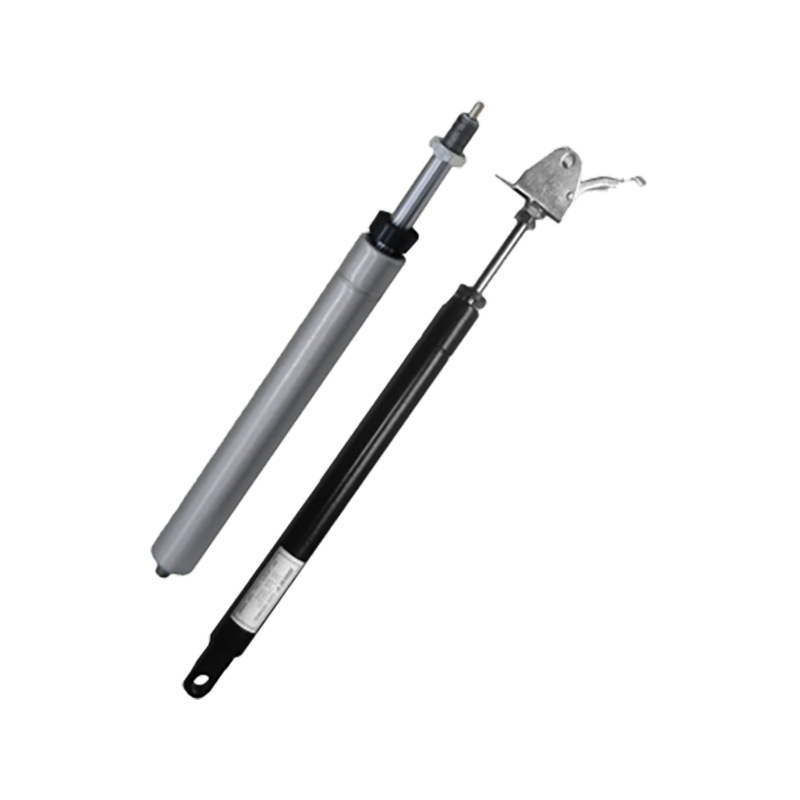
To understand why customization is so valuable, it is essential to grasp the underlying mechanics of a gas spring. At its core, the device consists of a sealed cylindrical tube containing high-pressure nitrogen gas and a small amount of hydraulic oil. A piston with a precise orifice moves through this tube. When the rod is compressed, the gas is forced through the orifice, creating a controlled resistance that provides the lifting or dampening force.
The Role of Nitrogen Pressure
The primary source of force in these systems is the nitrogen gas. According to basic gas laws, compressing the gas increases its pressure, which pushes back against the piston rod. By adjusting the initial fill pressure, manufacturers directly alter the output force (often measured in Newtons). A custom adjustable gas spring typically features a specialized valve mechanism that allows this pressure to be increased or decreased even after the unit has been fully assembled and installed.
Hydraulic Damping Characteristics
While the gas provides the main lifting force, the hydraulic oil is responsible for the speed control. As the piston moves, oil is forced through small internal passages. The viscosity of the oil and the size of these passages determine how quickly the rod extends or retracts. In high-quality adjustable models, the damping rate is calibrated during the custom design phase to ensure a smooth, jolt-free motion that matches the specific inertia of the load it is moving.
Key Differentiators: Custom vs. Standard Gas Springs
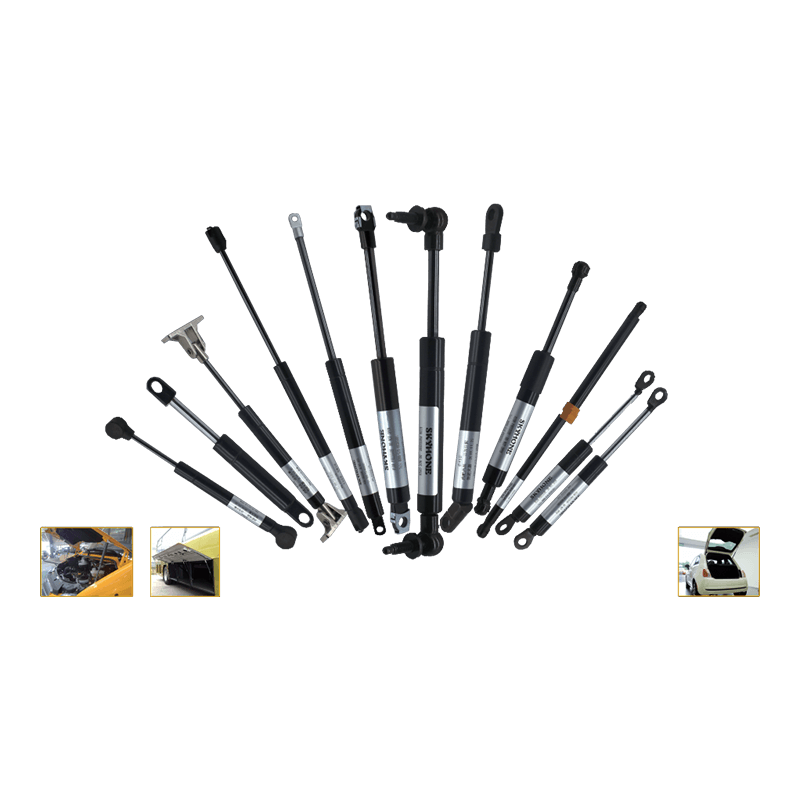
Selecting between a standard catalog item and a custom-engineered solution can dictate the success of a mechanical design. While standard springs are mass-produced to common dimensions and forces, custom adjustable variants are tailored to the exact geometrical and physical requirements of the application.
| Feature | Standard Gas Spring | Custom Adjustable Gas Spring |
|---|---|---|
| Force Calibration | Fixed at factory | User-adjustable via valve |
| Dimensional Precision | Standardized lengths | Tailored stroke and body length |
| Mounting Integration | Universal end fittings | Application-specific brackets |
| Environmental Sealing | Basic protection | Customized for moisture or dust |
The most significant advantage highlighted in this comparison is the ability to adapt to field conditions. For instance, if a heavy industrial lid has additional equipment bolted to it after the initial installation, a standard spring would suddenly become under-rated, causing the lid to slam shut. An adjustable model can be re-pressurized on-site to accommodate the new weight, saving time and replacement costs.
Primary Industrial and Commercial Applications
The versatility of a custom adjustable gas spring allows it to be deployed across a wide spectrum of industries where precise force control and ergonomic operation are paramount. The ability to customize both the physical dimensions and the force curve makes them indispensable in complex engineering scenarios.
Industrial Machinery and Automation
In automated manufacturing environments, heavy safety guards and access panels must be opened and closed frequently. Using adjustable gas springs ensures that operators can lift heavy guards with minimal physical effort, reducing fatigue and the risk of musculoskeletal injuries. Furthermore, the adjustable nature allows maintenance teams to lock out the guard safely at various angles during complex repair procedures, a feature rigid mechanical struts cannot provide.
Medical and Healthcare Equipment
Patient care environments demand absolute smoothness and quiet operation. Adjustable gas springs are utilized in dental chairs, examination tables, and imaging equipment. Because patient weights and procedural requirements vary drastically, the ability to adjust the support force ensures that the equipment can be precisely balanced for a lightweight pediatric patient or a heavier adult, providing a stable and comfortable platform without sudden jerks or drops.
Aerospace and Transportation Seating
Commercial aircraft and luxury trains utilize these components in passenger seating systems. The recline mechanism must offer smooth resistance that feels identical across thousands of seats. By using a custom adjustable gas spring, manufacturers can fine-tune the internal valve to deliver a premium tactile feel, compensating for the natural variance that occurs during mass production of the surrounding seat frame.
Critical Engineering Parameters for Customization
Ordering a custom adjustable gas spring requires a comprehensive understanding of the application's physical constraints. Engineers must evaluate several interdependent variables to ensure the final component functions safely and efficiently within the designated environment.
Force Calculation (F1 and F2 Values)
Gas springs are defined by two primary force metrics: F1 (the initial force required to start compressing the rod) and F2 (the force at maximum compression). Because of the volume change inside the cylinder, F2 is always greater than F1. When designing a custom spring, engineers must calculate the exact center of gravity of the moving object, the required hand-force for the operator, and the mounting angles to determine the precise F1 and F2 values needed. Accurately defining these forces prevents both dangerous free-fall and overly stiff operation.
Stroke Length and Extended Length
The stroke length dictates the total distance the rod can travel, which directly correlates to the opening angle of the lid or hatch it supports. The extended length must be carefully matched to the pivot points of the application. If the stroke is too short, the lid will not open fully; if it is too long, the mechanism may experience bottoming out, which transfers destructive impact forces directly into the piston and mountings.
Mounting Points and Orientation
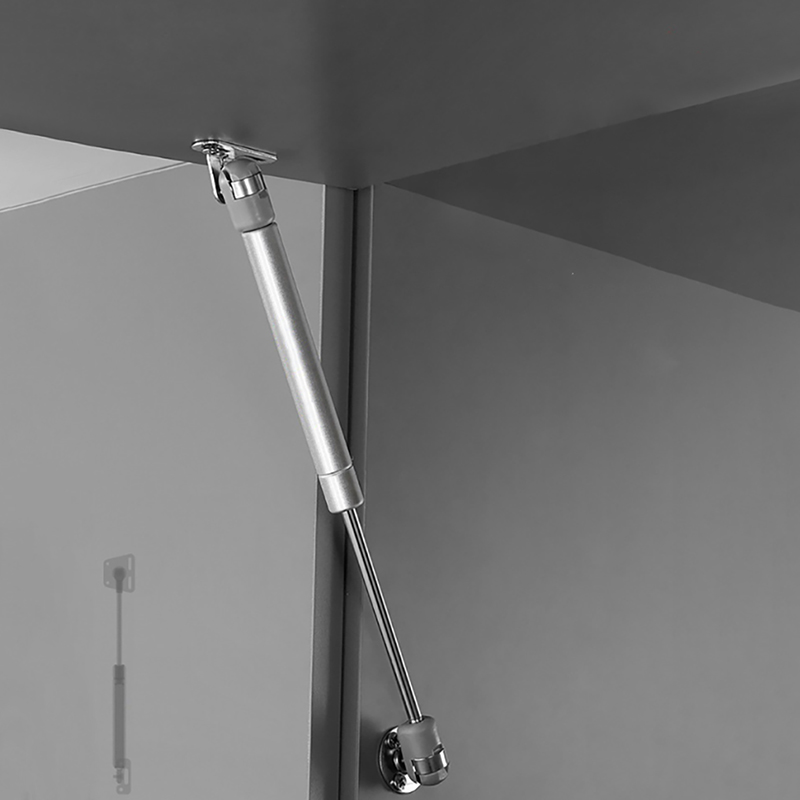
The orientation in which the gas spring is mounted (rod up or rod down) significantly affects its performance. Mounting a gas spring rod-down ensures that the hydraulic oil remains in contact with the piston rod and seals, providing consistent lubrication and optimal damping over the lifespan of the component. Custom mounting brackets are often required to achieve the exact geometric alignment necessary to prevent side-loading, which causes premature seal failure.
Best Practices for Installation and Calibration
Even the most precisely engineered custom adjustable gas spring will fail prematurely if installed incorrectly. Adhering to strict installation and calibration protocols guarantees both operator safety and the maximum operational lifespan of the component.
- Ensure all mounting brackets are perfectly aligned to prevent lateral forces from acting on the piston rod during extension or compression.
- Always install the unit with the cylinder body higher than the rod end (rod-down orientation) to maintain proper oil lubrication on the seals.
- Use a specialized high-pressure nitrogen filling kit and an accurate force gauge when adjusting the internal pressure to avoid over-pressurization.
- Test the adjusted force under actual load conditions, cycling the mechanism multiple times to verify smooth operation before putting the equipment into service.
- Protect the chrome-plated piston rod from physical impacts, scratches, and corrosive environments, as damage to this surface rapidly degrades the primary seal.
Following these steps ensures that the adjustability feature is utilized safely. Over-pressurizing a gas spring beyond its rated capacity can cause catastrophic failure of the cylinder walls or end fittings, turning the component into a dangerous projectile. Therefore, calibration should always be performed by trained personnel using appropriate pressure regulation equipment.
Environmental Considerations and Material Selection
The operating environment dictates the material choices and surface treatments required for a custom adjustable gas spring. A component destined for a cleanroom operates under vastly different constraints than one used in offshore marine environments or heavy industrial manufacturing.
- Corrosion Resistance: For marine or washdown applications, the cylinder is typically manufactured from high-grade stainless steel, and the piston rod receives an advanced surface treatment, such as hard chrome plating with additional organic coatings, to resist saltwater and harsh chemicals.
- Temperature Extremes: Standard gas springs experience a change in output force as ambient temperatures fluctuate. For extreme cold environments, special seals and low-temperature oil blends are required to prevent freezing and loss of damping. In high-heat scenarios, increased gas volume and heat-resistant seals are incorporated to prevent pressure overloads.
- Particulate Contamination: In dusty environments like woodworking or mining, specialized multi-lip wiper seals are integrated into the custom design to prevent abrasive dust from entering the cylinder and scoring the precision-machined inner bore.
Maintenance Protocols to Extend Operational Life
While gas springs are generally considered maintenance-free components compared to traditional mechanical springs, a proactive approach to inspection can drastically extend their usable life, particularly in heavily utilized industrial settings.
The most critical aspect of maintenance is the regular visual inspection of the piston rod. The rod acts as the primary dynamic seal surface. Even microscopic scratches or rust patches can create a path for high-pressure nitrogen to escape past the main seal, resulting in a gradual loss of force. If a custom adjustable gas spring begins to exhibit sagging or requires frequent re-pressurization, it is almost always due to compromised rod surface integrity. Replacing a gas spring at the first sign of seal leakage prevents sudden mechanical failure and potential injury to operators. Furthermore, inspecting the mounting points for play or elongation of bolt holes ensures that side-loads are not being introduced into the system due to worn-out brackets.
Safety Mechanisms and Failure Mode Management
Engineering safe systems requires anticipating how components behave when they reach the end of their lifecycle or encounter unexpected stresses. A custom adjustable gas spring must be integrated into a broader safety architecture that accounts for potential failure modes.
The most common failure mode is a gradual loss of gas pressure, leading to a slow descent of the supported load. However, sudden loss of pressure due to physical impact or seal blowout can cause a heavy lid to drop dangerously. To mitigate this risk, engineers often specify custom gas springs with integrated mechanical lock-out valves. These valves can be engaged to trap the gas pressure mechanically, allowing safe maintenance work underneath heavy objects. Additionally, external secondary retention devices, such as mechanical stays or safety chains, should always be used in conjunction with gas springs on applications where a falling object could cause severe injury, ensuring a fail-safe design methodology.



- Contact Info
-
-
 Phone+86-15950656125
 -
 Email
Email -
 AddressRoom 1007-1, South Building, Suyue Plaza, Suzhou Industrial Park, Suzhou City, Jiangsu Province, China
-
- Products
- Follow Us
- Need help? Please contact us
Copyright ©
SuZhou Skyhone Intelligent Technology Co., Ltd.
All Rights Reserved.
Privacy
Custom Ergonomic Adjustable Office Tables Manufacturers

