

 English
 русский
 Español
 عربى

Content
- 1 Mistake 1: Ordering Pneumatic Desks From China by Height Range Alone
- 2 Mistake 2: Treating Pneumatic Desks as One Product Category
- 3 Mistake 3: Testing Stability Only at Seated Height
- 4 Mistake 4: Ignoring Gas Spring and Column Traceability
- 5 Mistake 5: Ordering Pneumatic Desks From China on FOB Price Alone
- 6 A Six-Step Checklist Before You Place the Order
- 7 FAQ: Ordering Pneumatic Desks From China
5 Things Buyers Get Wrong When Ordering: Practical Applications, Selection, Performance
2026-11-04
Five things buyers get wrong when ordering pneumatic desks from China rarely appear on the quotation sheet: spring charge force, frame architecture, the height at which the desk was tested, component traceability, and real delivered cost. A desk at its maximum height can show more lateral movement once a 70 kg user leans on it at full extension, and that outcome is decided at purchase-order stage, not at final inspection.
Pneumatic height-adjustable desks replace the electric actuator with a gas spring. That removes the control box, the motor and most of the electronics, which is why unit price is lower and failure points are fewer. The trade-off is that the spring is a wear part whose behaviour depends on temperature, load and cycle count, and it is the component buyers ask about least.
The specification that decides your return rate is the one written into the purchase order, not the one printed in the brochure.
Mistake 1: Ordering Pneumatic Desks From China by Height Range Alone
Height range is a marketing number, while hold force is the engineering number. A pneumatic height-adjustable table is usually quoted as something like 665 to 1200 mm, which covers seated and standing positions for most adult users, and most buyers stop reading there.
What the range does not tell you is the force the spring carries at a given temperature, and that changes with physics. Gas pressure scales with absolute temperature, so a spring charged at 20 degrees Celsius loses roughly 7 percent of its force at zero degrees and around 11 percent at minus 10. A desk tuned to lift a light load in a warm showroom can refuse to rise after a winter in an unheated warehouse, while a desk tuned heavy will push back hard enough that users cannot lock it at chest height.
665-1200 mm Pneumatic height range across the current SK series
12 Pneumatic model pages in one catalogue, most differing only by frame
7% Spring force lost moving from 20 degrees to zero degrees Celsius
Write three numbers into the PO: charge force in newtons at 20 degrees Celsius, tolerance band, and operating temperature range. A tolerance of plus or minus 5 to 8 percent is normal for volume production, and a range of minus 10 to plus 40 degrees covers most European and North American retail channels.
Mistake 2: Treating Pneumatic Desks as One Product Category
Pneumatic desks differ far more in frame architecture than in drive type, and the frame is what actually arrives in the carton. Two tables with identical height ranges and identical springs can behave like different products once the column design changes.
A single Chinese catalogue typically carries these frame families:
- Center-mounted columns (SK03): a single column at the desk center, minimal footprint, suited to compact single-user sit-stand work.
- Eccentric columns (SK02): the column is offset from the desk center, suited to corner and return desks where the user sits off-axis.
- Square aluminum tube columns (SK07): higher lateral stiffness per kilogram, the usual pick when the desk carries two monitors and a clamp arm.
- Flat-leg and high-leg frames (SK04, SK05): simpler tooling, more floor contact, faster assembly, but more lateral movement at full extension than double-leg or square-tube frames.
- Double-leg frames (SK14): heavier load ratings and a wider base, with higher carton volume and freight per unit.
The frame choice drives four things that reach your margin: lateral wobble at standing height, cubic metres per carton, assembly time at the customer end, and whether a monitor arm clamp can grip the top edge without crushing the core. The user-side case for sit-stand switching is covered in this note on how pneumatic height-adjustable desks improve work efficiency; the sourcing question is whether the frame stays rigid on day 900.
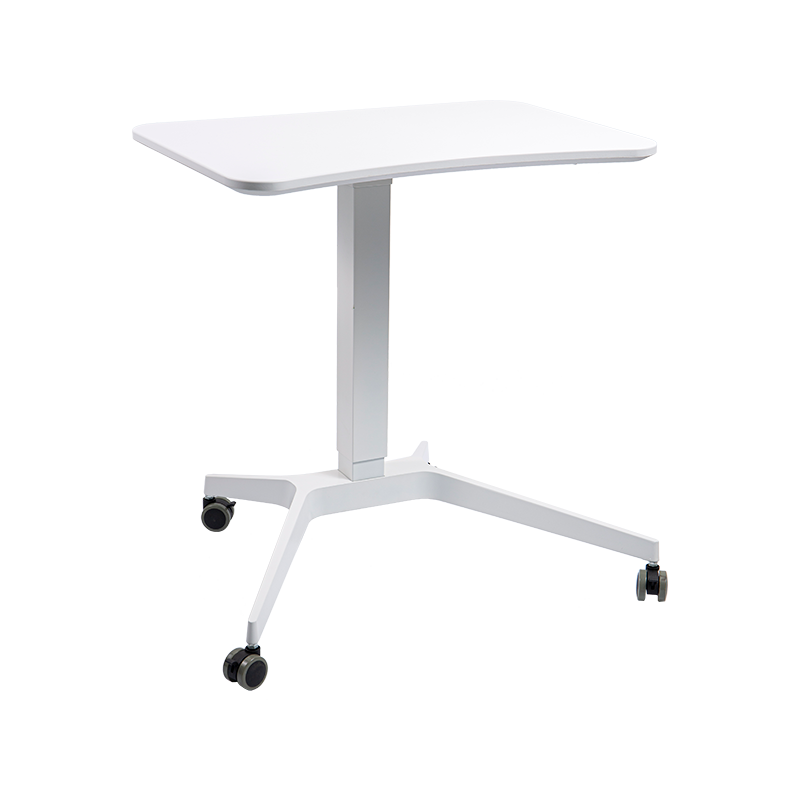 SK07 Pneumatic Height-Adjustable Desk with Square Aluminum ColumnSquare-tube pneumatic sit-stand desk with 720–1150 mm lift and 715×475×25 mm MDF top on an iron frame; relevant when assessing frame rigidity at standing height.View Product →
Mistake 3: Testing Stability Only at Seated Height
A desk that is stable at seated height can be unacceptable at full extension, because lateral stiffness drops as the column extends. Most factory inspection reports show a single height, usually the seated position, which is the least demanding configuration to pass.
Replace the single check with a short protocol and require photographs or video for each step. The five tests below take a lab under an hour per model and settle most arguments before they start.
| Test | Method | Acceptance written into the PO |
| Lateral wobble | 5 kg horizontal push at the top edge, desk at maximum height | Deflection of 10 mm or less at maximum height |
| Load hold | 80 kg distributed load for 24 hours, mid travel | Height loss of 3 mm or less |
| Cycle endurance | 20,000 full up and down cycles at rated load | Force loss of 10 percent or less, no seal weep |
| Cold start | 4 hours at minus 10 degrees Celsius, then three lifts | Locks at every stop position |
| Packaging | 1.2 m corner drop on the closed carton | No column, lever or top deformation |
Run the lateral and load tests at maximum height, not at the height printed on the sample card. If a supplier report lists one number, ask which height it was measured at, because the answer usually explains the wobble complaints.
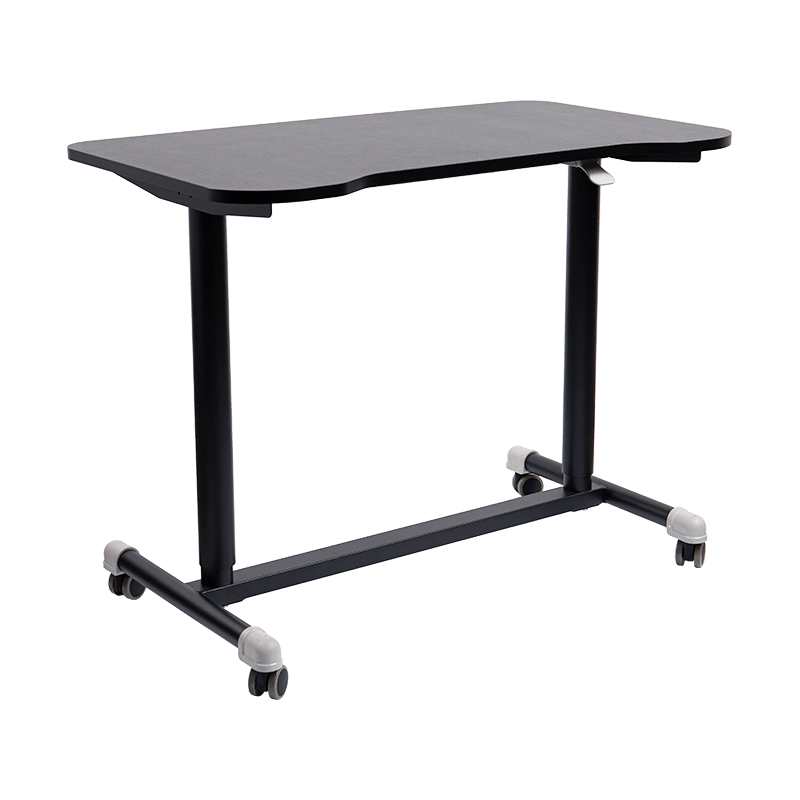 SK-14 Double-Leg Pneumatic Height-Adjustable DeskDouble-leg gas-spring desk with 760–1100 mm lift, 980×560 mm top, iron frame and casters; gas-spring durability is central to warranty cost.View Product →
Mistake 4: Ignoring Gas Spring and Column Traceability
The gas spring decides your warranty cost, and it is the one part most buyers never name. A spring is a sealed pressure vessel with a rod, a tube and a seal; seal grade and fill pressure determine whether the desk still holds height after 20,000 cycles.
Catalog-level order
- Item described as pneumatic desk only
- Height range and colour agreed
- Spring sold under the seller's own label
- Spares available on request
- Warranty stated verbally
BOM-level order
- Spring part number and lot code recorded
- Charge force in newtons at 20 degrees Celsius
- Seal material and cycle test data attached
- Spare ratio of 1 to 2 percent shipped in the carton
- Warranty terms in the contract, not the email
If the answer to which factory stamps the spring tube is a shrug, you are not buying a component, you are buying a risk. SuZhou Skyhone Intelligent Technology Co., Ltd. lists pneumatic desks and gas springs as separate product lines, which is a useful signal that the spring is specified rather than bought in at the last minute.
A lot code lets you quarantine the affected cartons instead of recalling a container when one batch of springs runs soft. Ask for the part number, the lot code and one spare spring per hundred desks, a combination that covers most field failures without a service network in the destination country.
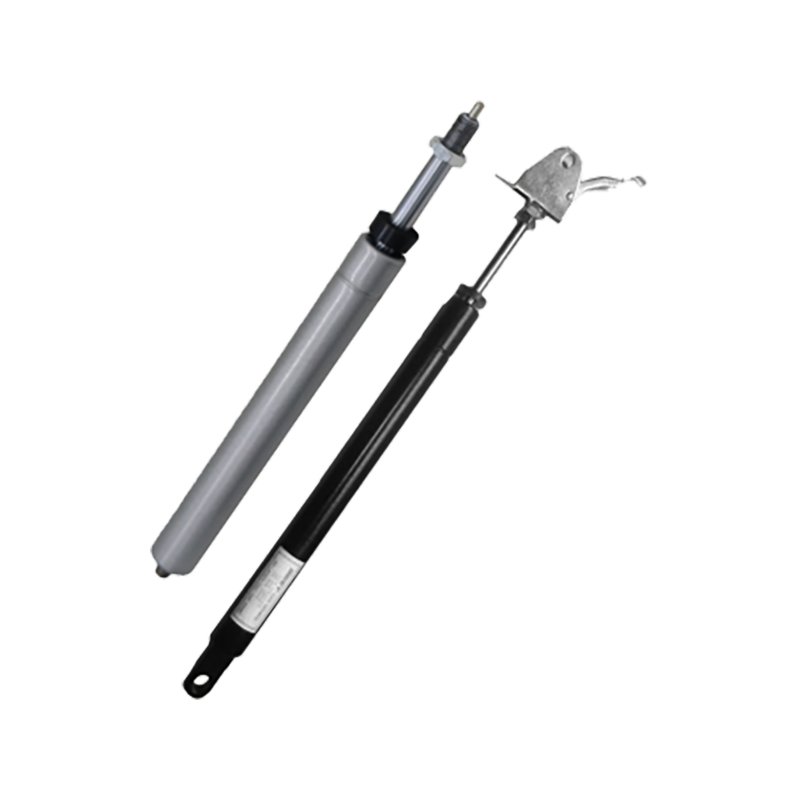 Adjustable Gas Springs for Height-Adjustable Office FurnitureLockable, free-type and free-stop gas springs for desks and chairs, with load guidance and OEM/ODM customization; review lot traceability and spare-spring needs.View Product →
Mistake 5: Ordering Pneumatic Desks From China on FOB Price Alone
FOB unit price covers roughly two thirds of what a delivered desk costs, and the remaining third is where margin quietly disappears. Buyers who compare only the quotation line routinely approve a supplier who is cheaper per unit and more expensive per landed desk.
Four cost lines move after the FOB price is agreed: carton volume and container utilization, rework and return handling, spare parts and documentation, and demurrage when paperwork does not match the shipment. The chart is a planning model rather than an industry statistic, so use it to check whether your own cost sheet carries all five lines.
Where pneumatic desk orders lose money after arrival
Planning model for a 1,600-unit container order, used to test whether a landed cost sheet is complete. Percentages are relative weights, not a published statistic.
A difference of 0.04 cubic metres per desk on a 1,650-unit order is 66 cubic metres of cargo, roughly one extra 40-foot high-cube container. Ask for CBM per unit before you compare price.
Carton dimensions are the cheapest number to negotiate and the most expensive one to ignore. Get them in writing, check them against your container plan, and treat a changed carton as a changed product.
A Six-Step Checklist Before You Place the Order
Six steps, in this order, remove most of the surprises described above. Each one produces a document you can attach to the purchase order or hand to an inspector.
- Freeze the spec sheet. Height range, load rating, charge force, temperature band, frame family, top size and finish on one page, signed by both sides.
- Order three pre-production samples from one lot. Test one, keep one sealed as the golden sample, send one to an independent lab.
- Put the test protocol in the PO. Measurement height, load, cycle count and acceptance numbers exactly as listed in the table above.
- Request the component BOM. Gas spring part number, column wall thickness, glides, control lever and fasteners, each with a reference.
- Agree the AQL and the spare ratio. AQL 2.5 for major defects and 1 to 2 percent spare springs is a normal starting point for furniture importers.
- Confirm carton dimensions and CBM per unit. Verify the loading plan against those figures before the deposit leaves.
FAQ: Ordering Pneumatic Desks From China
Are pneumatic desks less reliable than electric standing desks?
They have fewer failure points but one wear part. With no control box or motor, most warranty claims trace back to the gas spring losing force or the seal weeping. A spring specified by charge force, lot code and a cycle rating at the rated load is as dependable as a mid-range electric frame.
What height range should I specify for a general office order?
665 to 1200 mm covers seated and standing positions for most adult users and matches existing tooling at most Chinese pneumatic desk factories. If you sell into markets with a taller average stature, verify the standing height under load instead of trusting the catalogue figure.
How do I check the gas spring before the container ships?
Ask for the charge force test record for the production lot, then re-test three units yourself at room temperature and again after four hours in a cold chamber. A spring that still locks at every stop after the cold soak will survive a winter warehouse.
Which certifications should I ask for?
Ask for the quality system certificate, a test report against the standard your market requires (EN 527-1 for Europe, BIFMA X5.5 for North America), and material compliance documents for the top and any electrical options. Reports should name the model tested and the date of the test.

- Contact Info
-
-
 Phone+86-15950656125
-
 Email
-
 AddressRoom 1007-1, South Building, Suyue Plaza, Suzhou Industrial Park, Suzhou City, Jiangsu Province, China
-
- Products
- Follow Us
- Need help? Please contact us
Copyright ©
SuZhou Skyhone Intelligent Technology Co., Ltd.
All Rights Reserved.
Privacy
Custom Ergonomic Adjustable Office Tables Manufacturers

