

 English
  русский
  Español
  عربى
عربى 
How to choose the right adjustable gas spring for your application?
2026-08-03
Adjustable gas springs provide the ultimate solution for applications requiring variable support force and precise positional control. Unlike standard fixed-force springs, these mechanisms allow users to modify the internal pressure or locking mechanism to suit specific weight requirements and ergonomic preferences. This adjustability ensures optimal performance, safety, and user comfort across a wide range of industrial and domestic environments. By integrating these components, engineers and designers can achieve smoother motion and enhanced versatility in their projects.
Understanding the Internal Mechanism
To fully appreciate the utility of an adjustable gas spring, one must understand its internal composition. The device operates on a simple yet effective principle: compressed gas contained within a cylinder exerts force on a piston rod. The key to adjustability lies in the regulation of this pressure and the flow of internal fluids.
The Role of Nitrogen and Oil
The cylinder is filled with high-pressure nitrogen gas, which provides the primary lifting force. Additionally, a small amount of hydraulic oil is included. This oil serves two critical functions: it lubricates the seals and internal components to reduce wear, and it controls the speed of the piston rod's movement at the end of the stroke. The damping effect created by the oil passing through orifices prevents the lid or mechanism from slamming shut, ensuring a controlled and safe motion.
The Adjustment Valve
The defining feature of an adjustable model is the valve mechanism. Located at the end of the cylinder opposite the rod, this valve allows the user to increase or decrease the internal pressure. By opening the valve, gas can be added or released, thereby altering the force output. This capability transforms a static component into a dynamic tool that can be fine-tuned in real-world scenarios.
Types of Adjustable Gas Springs
Not all adjustable springs function the same way. Depending on the application, different mechanisms are employed to achieve the desired control. Selecting the correct type is crucial for the functionality of the final product.
| Type | Mechanism | Primary Use Case |
|---|---|---|
| Variable Force | Valve controls internal gas pressure | Industrial machinery covers |
| Locking Gas Spring | Release pin locks rod in position | Medical chairs, ergonomic desks |
| Stainless Steel | Corrosion-resistant materials | Marine, food processing environments |
Variable Force Springs
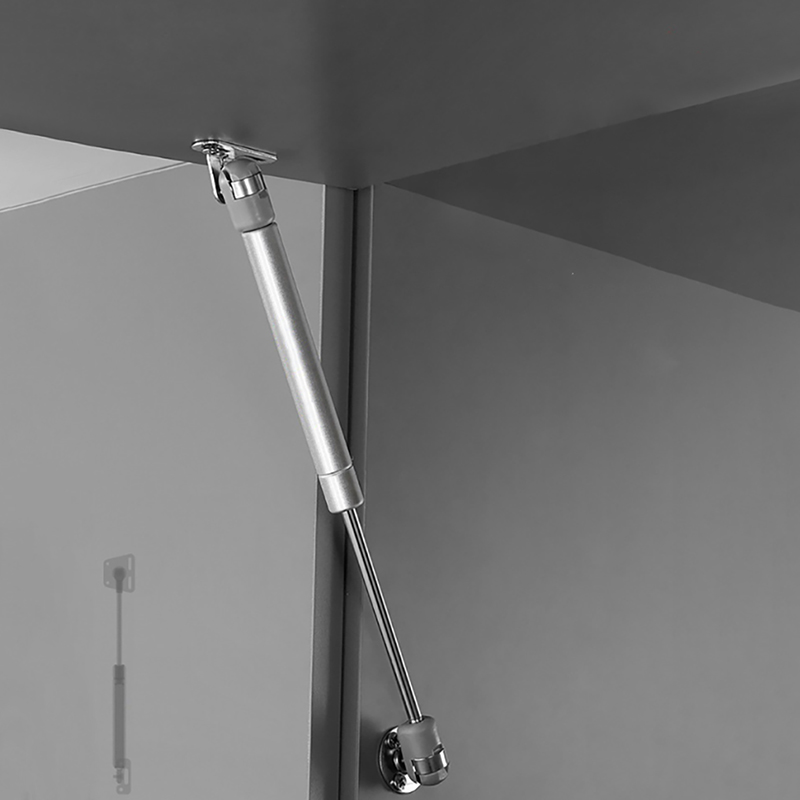
These are the most common type used for heavy covers and hatches. If a hatch is too heavy to lift or does not stay open, the valve can be opened to release gas and lower the force. Conversely, if the cover flies open too violently, gas can be added to increase resistance. This eliminates the need for trial-and-error replacement of fixed springs.
Locking Gas Springs
These variants incorporate a mechanism that allows the piston rod to be locked at any point along its stroke. They are essential for applications where the position must remain fixed without drifting, such as in adjustable hospital beds or office chairs. The user can typically release the lock via a lever or button to reposition the equipment.
Key Applications and Benefits
The versatility of adjustable gas springs makes them indispensable across various sectors. Their ability to be tailored to specific loads provides significant advantages over static mechanical solutions.
- Industrial Machinery: Supporting heavy safety guards and machine covers.
- Automotive: Adjustable trunk lids and tailgate supports.
- Medical Equipment: Height-adjustable tables and patient lifters.
- Furniture Design: Ergonomic chairs and standing desk converters.
Enhancing Ergonomics and Safety
In environments where humans interact with machinery, safety is paramount. An improperly supported heavy lid can pose a severe risk. Adjustable springs allow operators to set the exact force needed to balance a load, effectively making heavy objects feel weightless. This reduces strain on the operator and prevents accidental injury from falling components.
Installation and Adjustment Guide
Proper installation is vital to ensure the longevity and effectiveness of the gas spring. While the process is straightforward, attention to detail regarding orientation and mounting points is required.
Mounting Orientation
Gas springs should generally be installed with the rod pointing downwards. This orientation ensures that the oil inside the cylinder keeps the seal lubricated. If installed rod-up, the oil may drain away from the seal, leading to premature wear and gas leakage over time.
Steps for Adjusting Force
When adjusting the force, follow a systematic procedure to avoid damage or injury:
- Ensure the gas spring is securely mounted, but the load is in a neutral or supported position.
- Remove the protective cap from the valve body.
- Connect a suitable filling kit or valve key to the opening.
- Gradually release gas to lower force, or pump in nitrogen to increase force.
- Test the movement and repeat until the desired balance is achieved.
"

- Contact Info
-
-
 Phone+86-15950656125
 -
 Email
Email -
 AddressRoom 1007-1, South Building, Suyue Plaza, Suzhou Industrial Park, Suzhou City, Jiangsu Province, China
-
- Products
- Follow Us
- Need help? Please contact us
Copyright ©
SuZhou Skyhone Intelligent Technology Co., Ltd.
All Rights Reserved.
Privacy
Custom Ergonomic Adjustable Office Tables Manufacturers

